The archive

The Black Press, 1865–1951

Before there was a platform, there was a press. These are real front pages, scanned by the Library of Congress and in the public domain — the paper that carried Black business, Black politics and Black life when nobody else would print it.

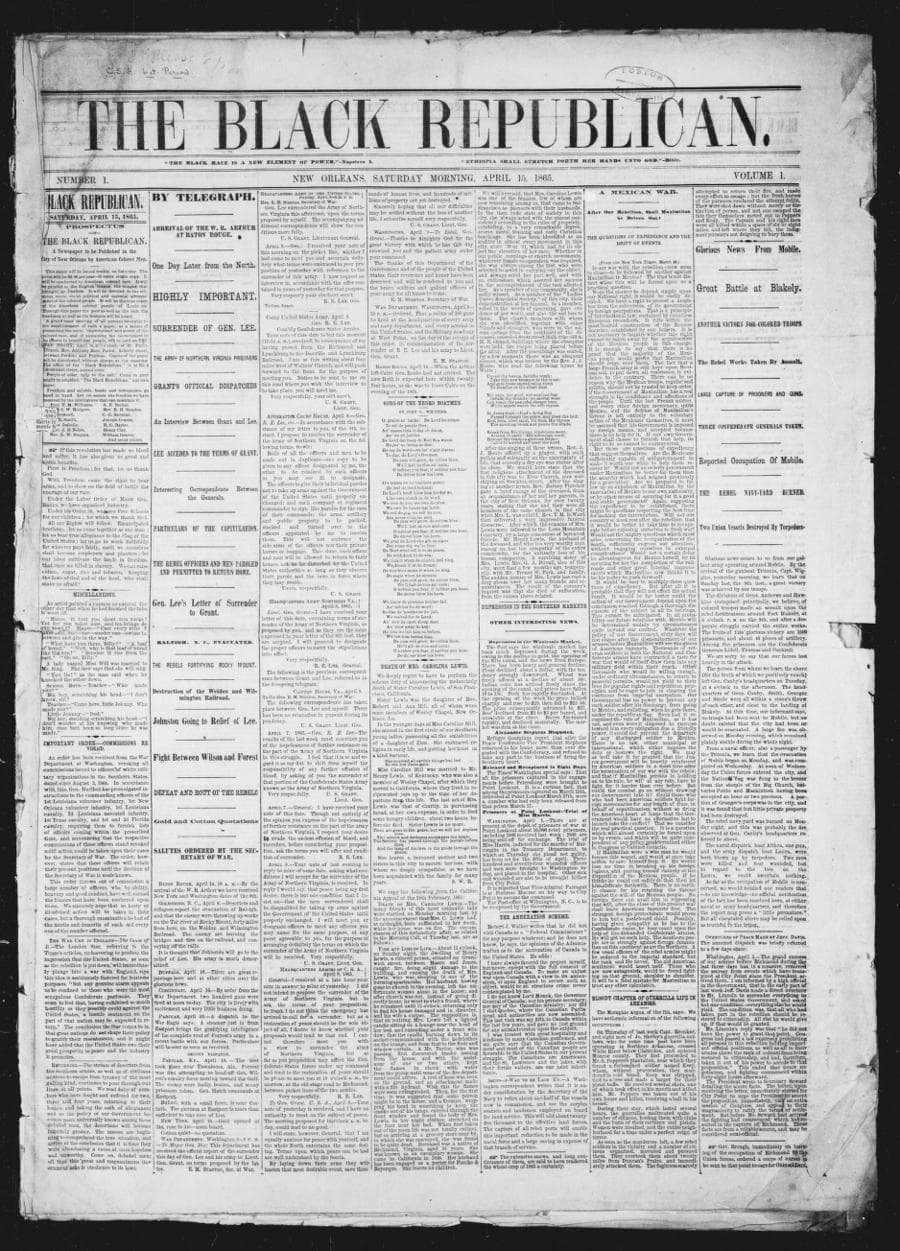
Front page of The Black Republican, April 15, 1865

April 15, 1865 · New Orleans, La.

The Black Republican

Volume one, number one — printed in New Orleans six days after Appomattox, for people who had been legally owned the year before. It leads, under BY TELEGRAPH, with the surrender of General Lee. Its editor, the Reverend Stephen Walter Rodgers, had been born enslaved and learned to read when teaching him to do so was a crime. The prospectus on this page promises that “the poor as well as the rich, the freedmen as well as the freemen will be heard.” Inside, a column headed Information Wanted ran notices from people searching for family sold away from them.
Read the page

29Front pages
86Years covered
3First issues
3Still publishing
34Record citations from these papers

Reconstruction

18651877

Papers founded in the years when Black men could vote and hold office in the South. Several were printed by men who had been enslaved, for readers who had been too.

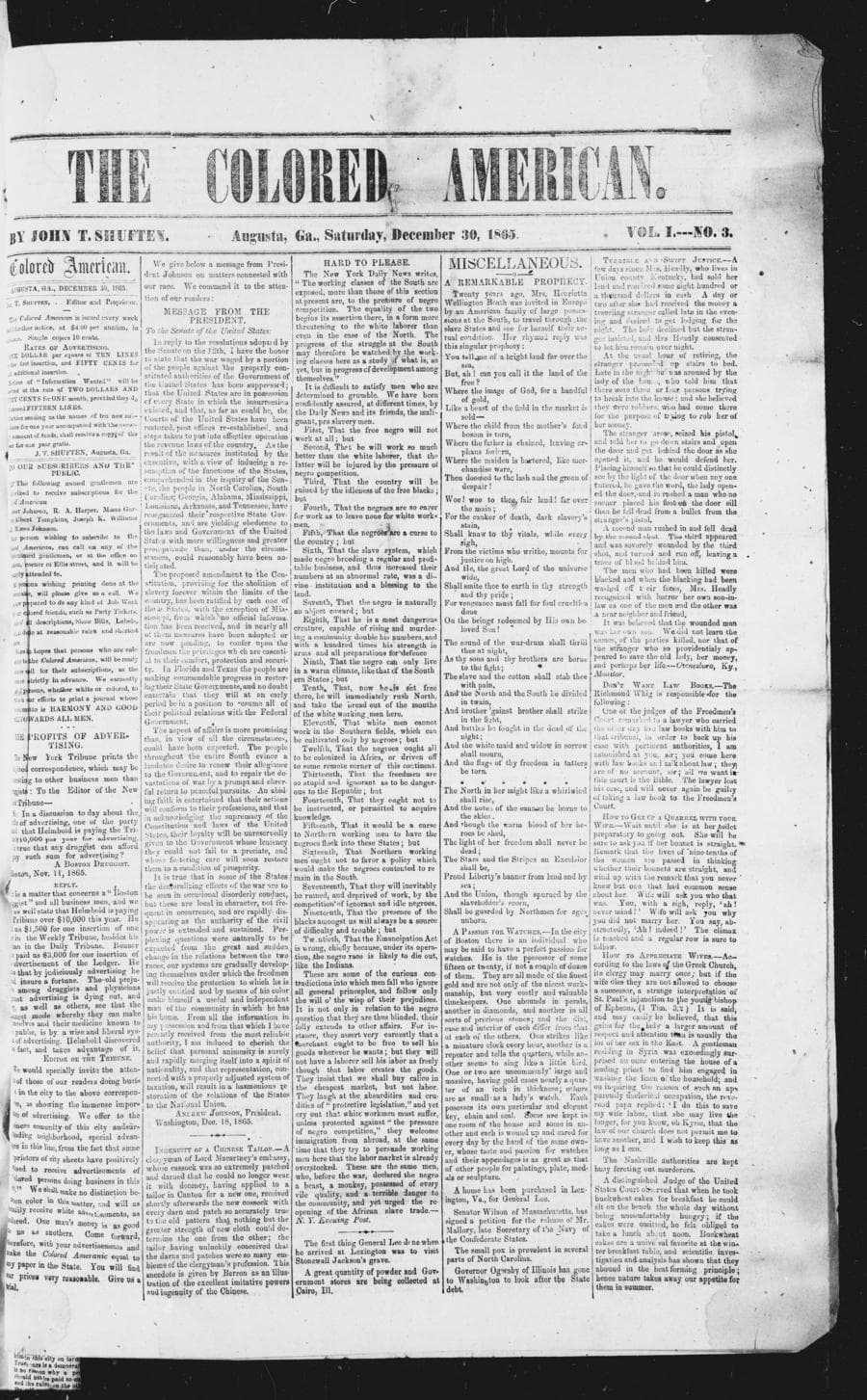
Front page of The Colored American, December 30, 1865

December 30, 1865 · Augusta, Ga.

The Colored American

The first Black newspaper published in Georgia, founded by John T. Shuften eight months after the war ended. It lasted five issues. This is the third. Within weeks the Georgia Equal Rights Association had bought the press and renamed it the Loyal Georgian — the paper died, but the type kept printing.

Read the page →
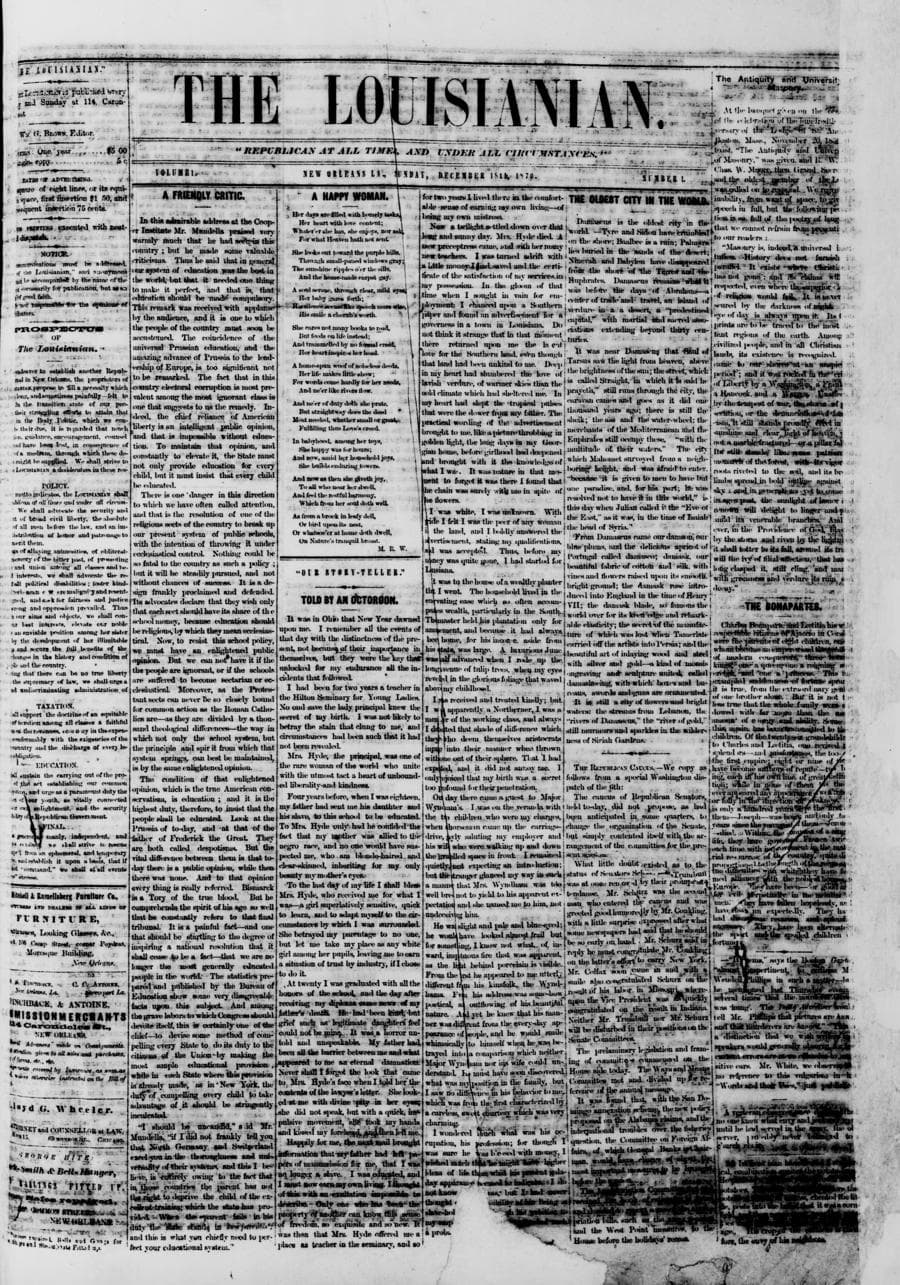
Front page of The Louisianian, December 18, 1870

December 18, 1870 · New Orleans, La.

The Louisianian

Issue no. 1

The first issue of P.B.S. Pinchback's paper. Two years after printing it he became governor of Louisiana — the first Black man to govern an American state, and the last for a hundred and twenty years. He ran the Louisianian under the motto “Republican at all times, and under all circumstances,” and wrote it for Black and white readers both, which almost no Black paper of the century attempted.

Read the page →

The taking back

18781899

The vote was withdrawn state by state and the lynching years began. The Black press kept printing through it, and in several cases it was the only place a killing was reported at all.

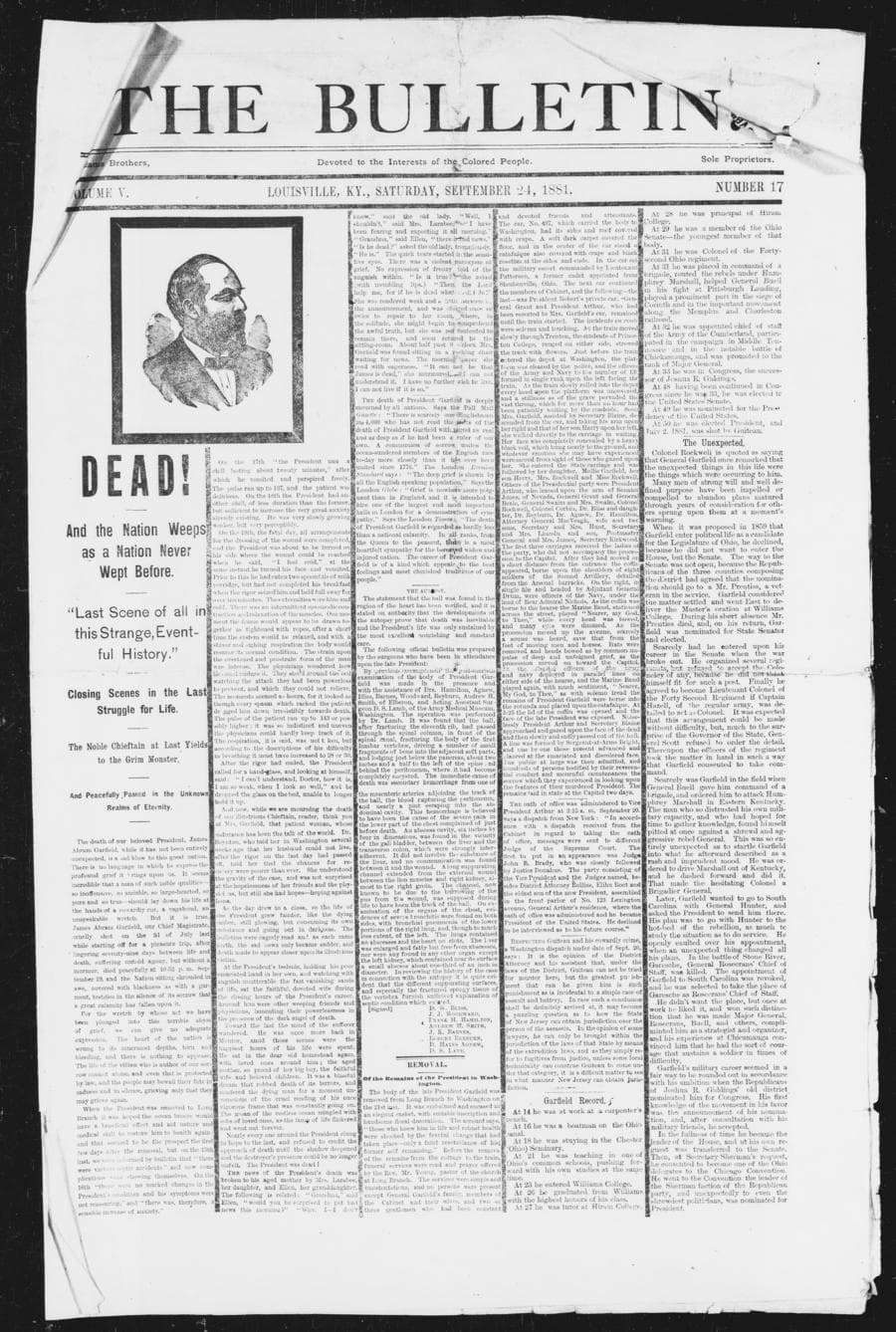
Front page of The Bulletin, September 24, 1881

September 24, 1881 · Louisville, Ky.

The Bulletin

The Library of Congress does not know when this paper started or when it stopped; its catalog entry reads 18??–18??. The masthead on this copy says Volume 5, Number 17 — so by the day it was printed it had already been coming out for five years. That is most of what survives of the Black press: the paper itself, still counting.

Read the page →
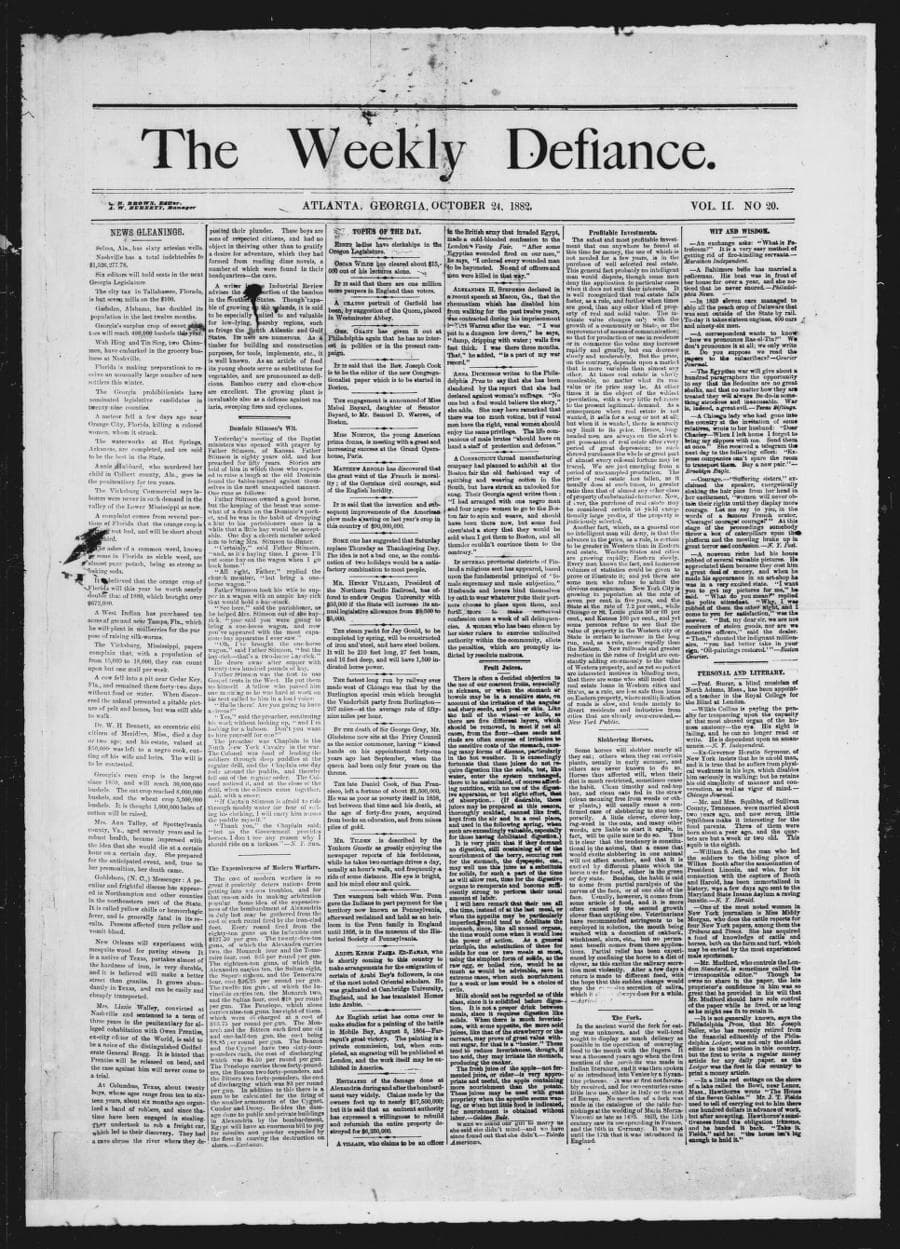
Front page of The Weekly Defiance, October 24, 1882

October 24, 1882 · Atlanta, Ga.

The Weekly Defiance

Eight years of a Black weekly in Atlanta named, without apology, the Defiance. It ran from 1881 until 1889 — the same decade the state was writing the laws that would take the vote back.

Read the page →
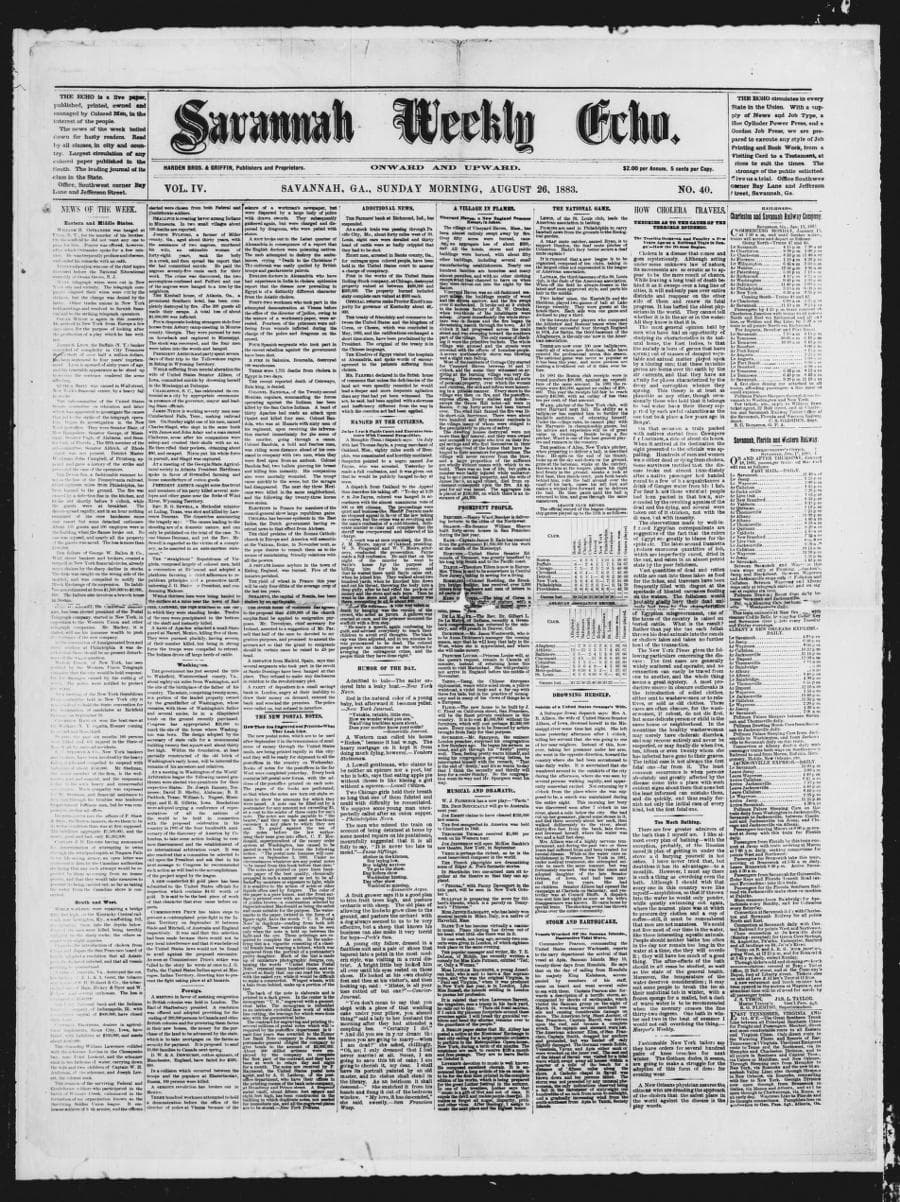
Front page of Savannah Weekly Echo, August 26, 1883

August 26, 1883 · Savannah, Ga.

Savannah Weekly Echo

Founded by Robert and Thomas T. Harden with D. Griffin in 1879, and read across Georgia, Florida and South Carolina. It claimed the largest circulation of any Black paper in the South and used it to report racial violence and the fight against it.

Read the page →
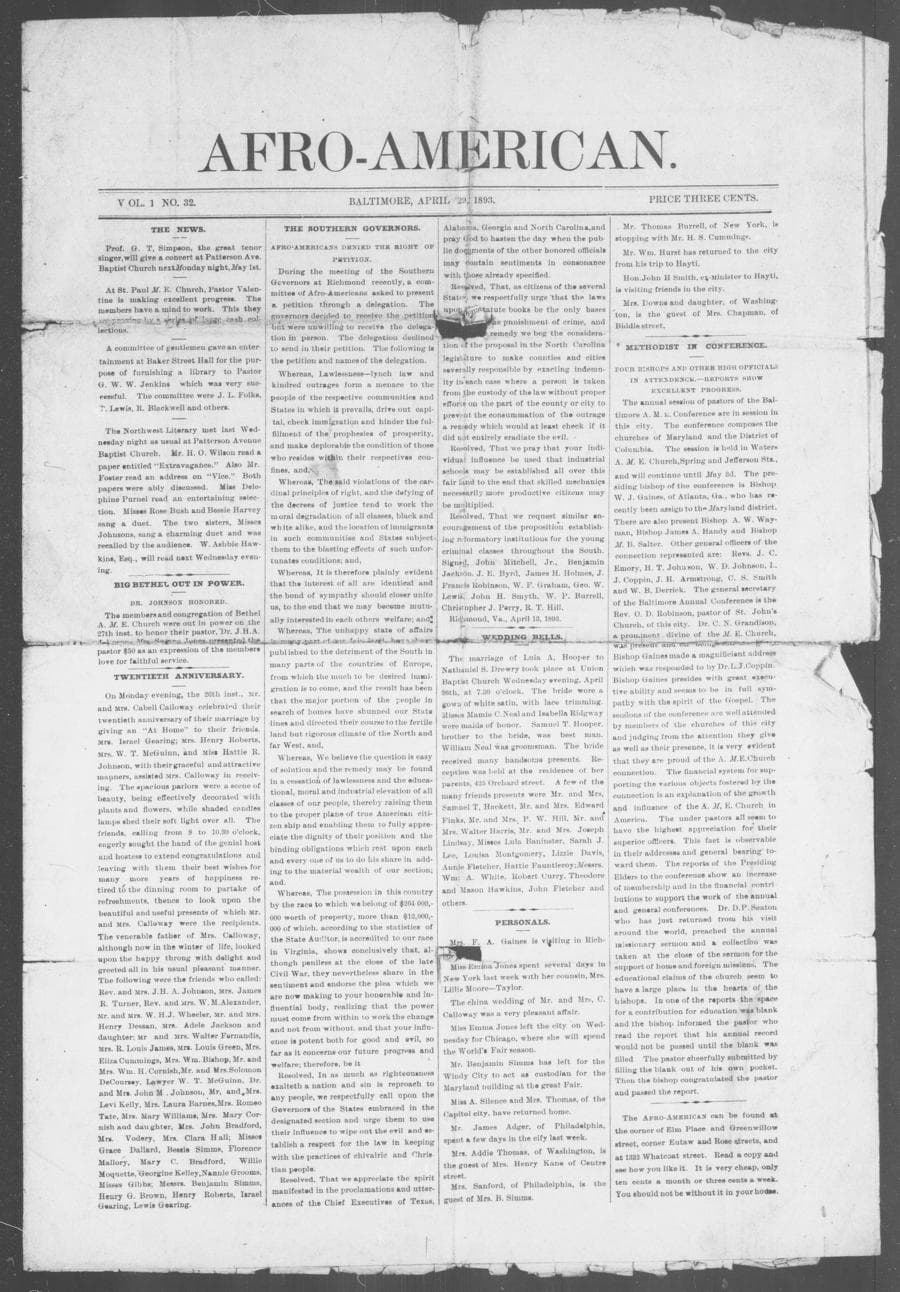
Front page of The Afro-American, April 29, 1893

April 29, 1893 · Baltimore, Md.

The Afro-American

Still publishing

John H. Murphy Sr. was born enslaved, fought for the Union, and at fifty-two merged three church bulletins into a newspaper. This copy is from its first year. It is still publishing — the longest-running Black family-owned newspaper in the United States, now in its fifth generation. Everything else on this page is history. This one is a going concern.

Read the page →

The new century

19001918

Business leagues, fraternal orders, church weeklies and national papers. This is the era in which Black owners first organized each other on a national scale.

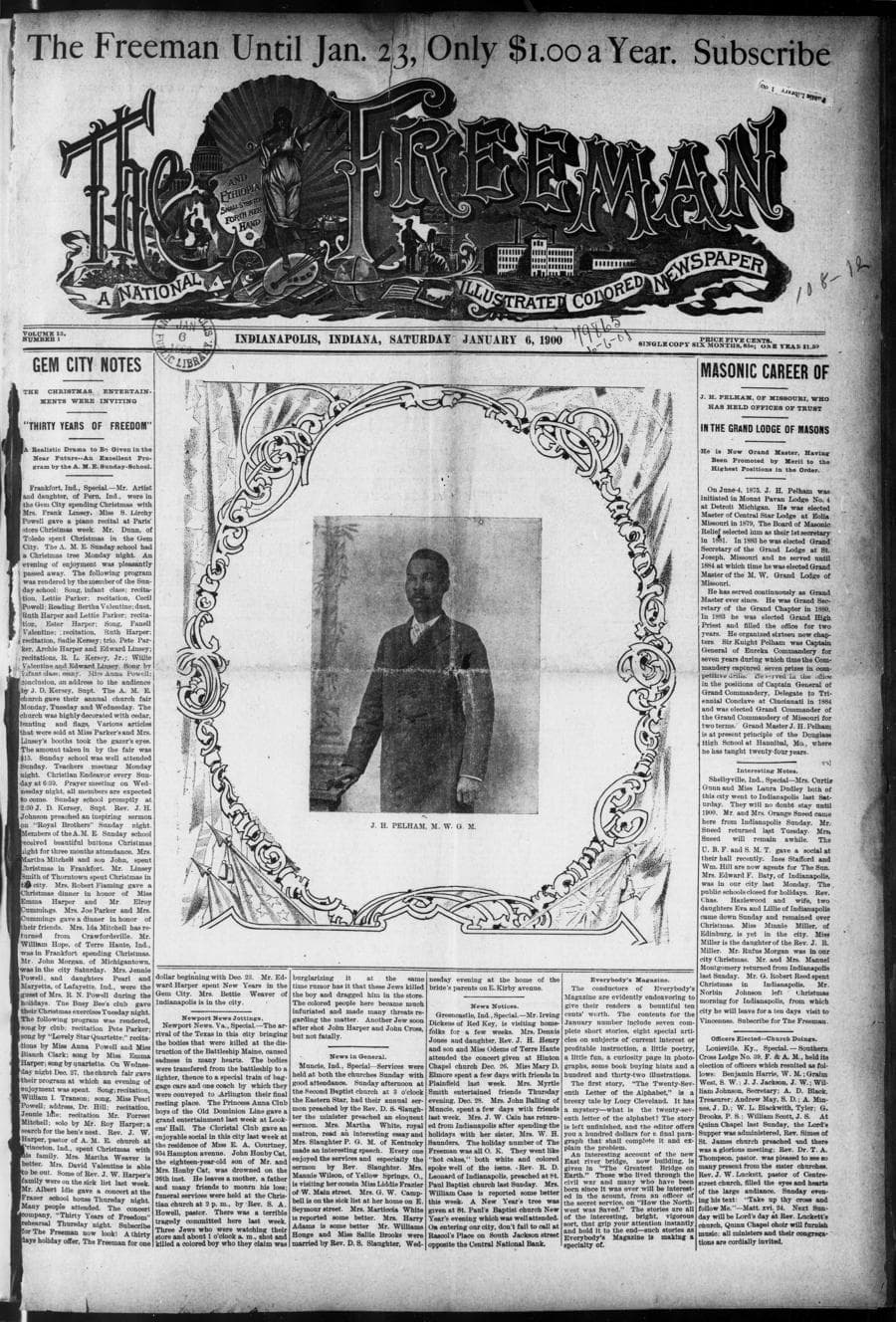
Front page of The Freeman, January 6, 1900

January 6, 1900 · Indianapolis, Ind.

The Freeman

The first illustrated Black newspaper in the country — it ran engravings and portraits when almost no Black paper could afford them, and was called the Harper's Weekly of the colored race. The Library of Congress holds 883 issues of it from this quarter-century alone.

Read the page →
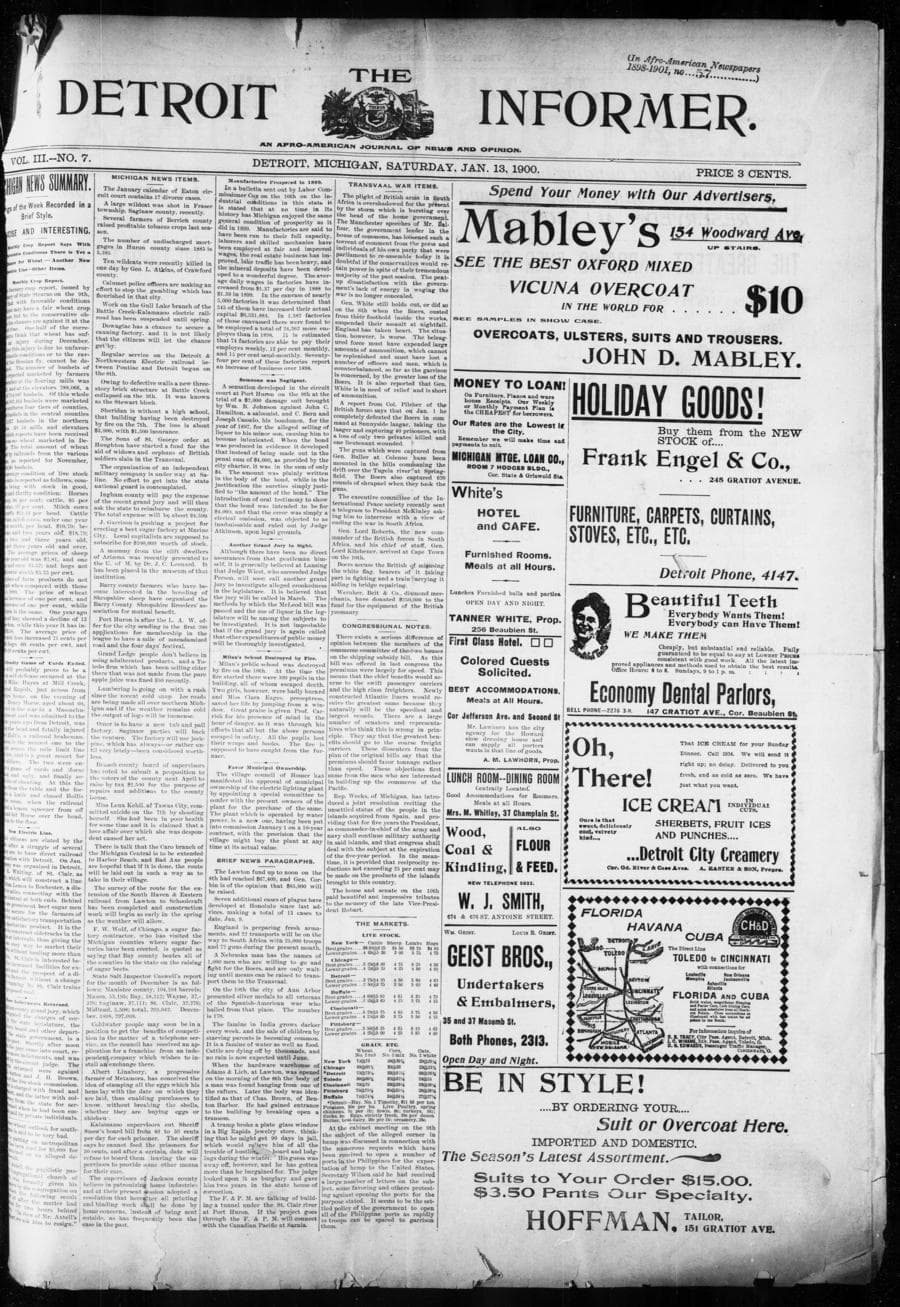
Front page of The Detroit Informer, January 13, 1900

January 13, 1900 · Detroit, Mich.

The Detroit Informer

Detroit, twenty years before the Great Migration turned it into a destination. The front page is mostly advertising — overcoats, furniture, a clothing house — which is a Black paper carrying Black commerce on page one.

Read the page →
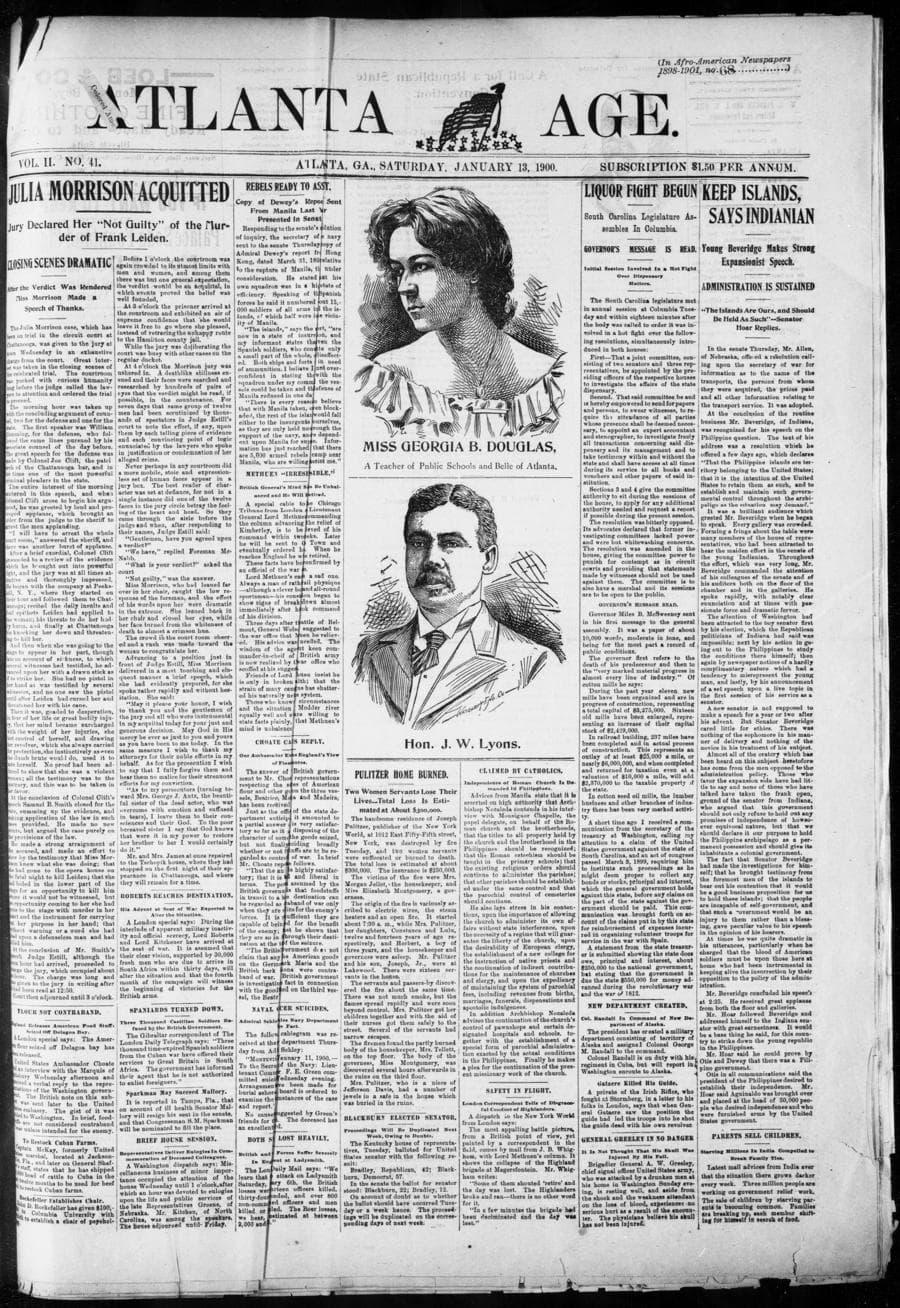
Front page of The Atlanta Age, January 13, 1900

January 13, 1900 · Atlanta, Ga.

The Atlanta Age

Portraits set into the front page — including Fredericka Douglass Sprague, granddaughter of Frederick Douglass. Printed in Atlanta six years before the white mobs of 1906.

Read the page →
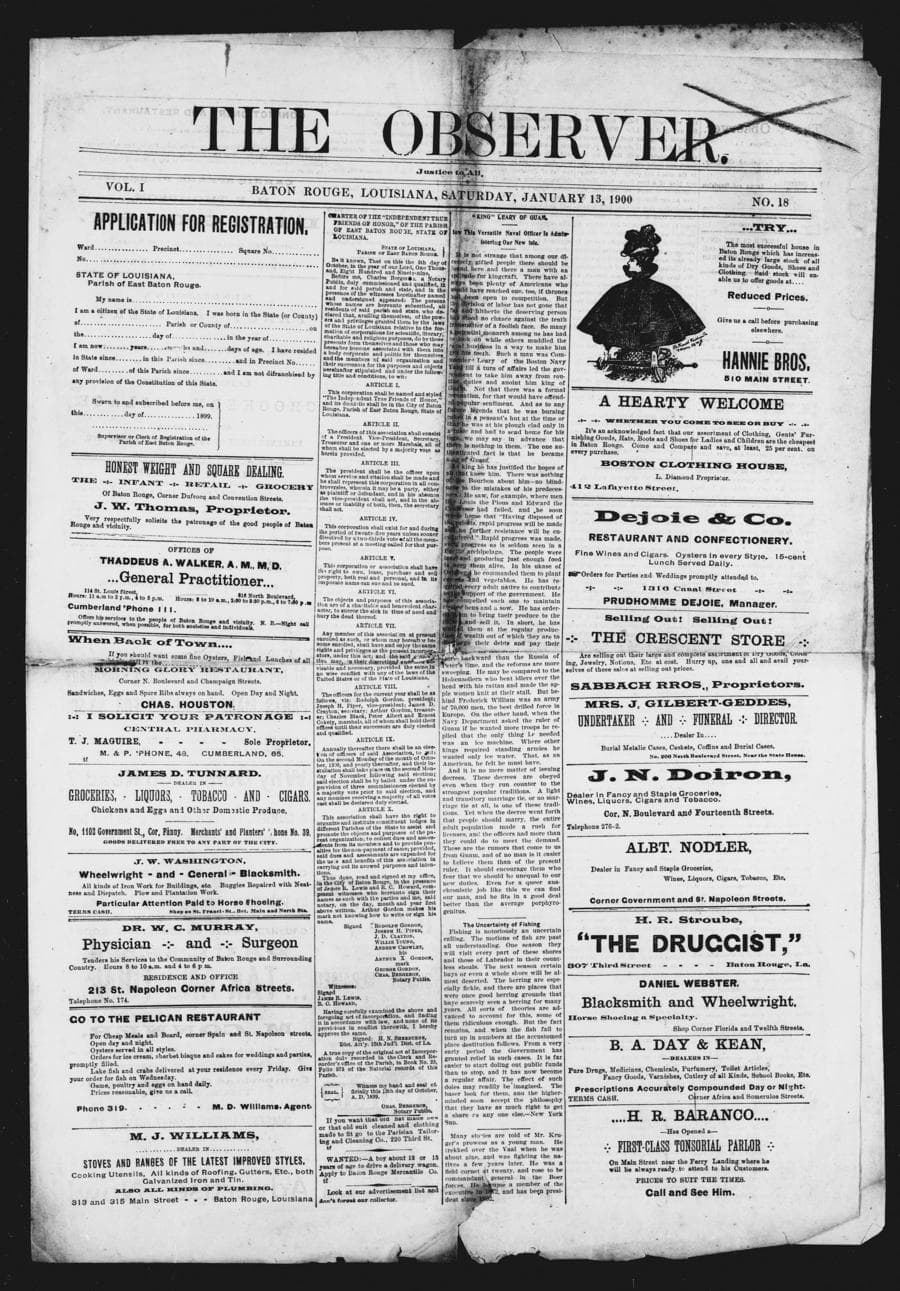
Front page of The Observer, January 13, 1900

January 13, 1900 · Baton Rouge, La.

The Observer

Volume 1, number 11 — this paper was eleven weeks old when it printed an application for registration on its front page. Louisiana had written its grandfather clause into the state constitution two years before, and registration was the whole fight.

Read the page →
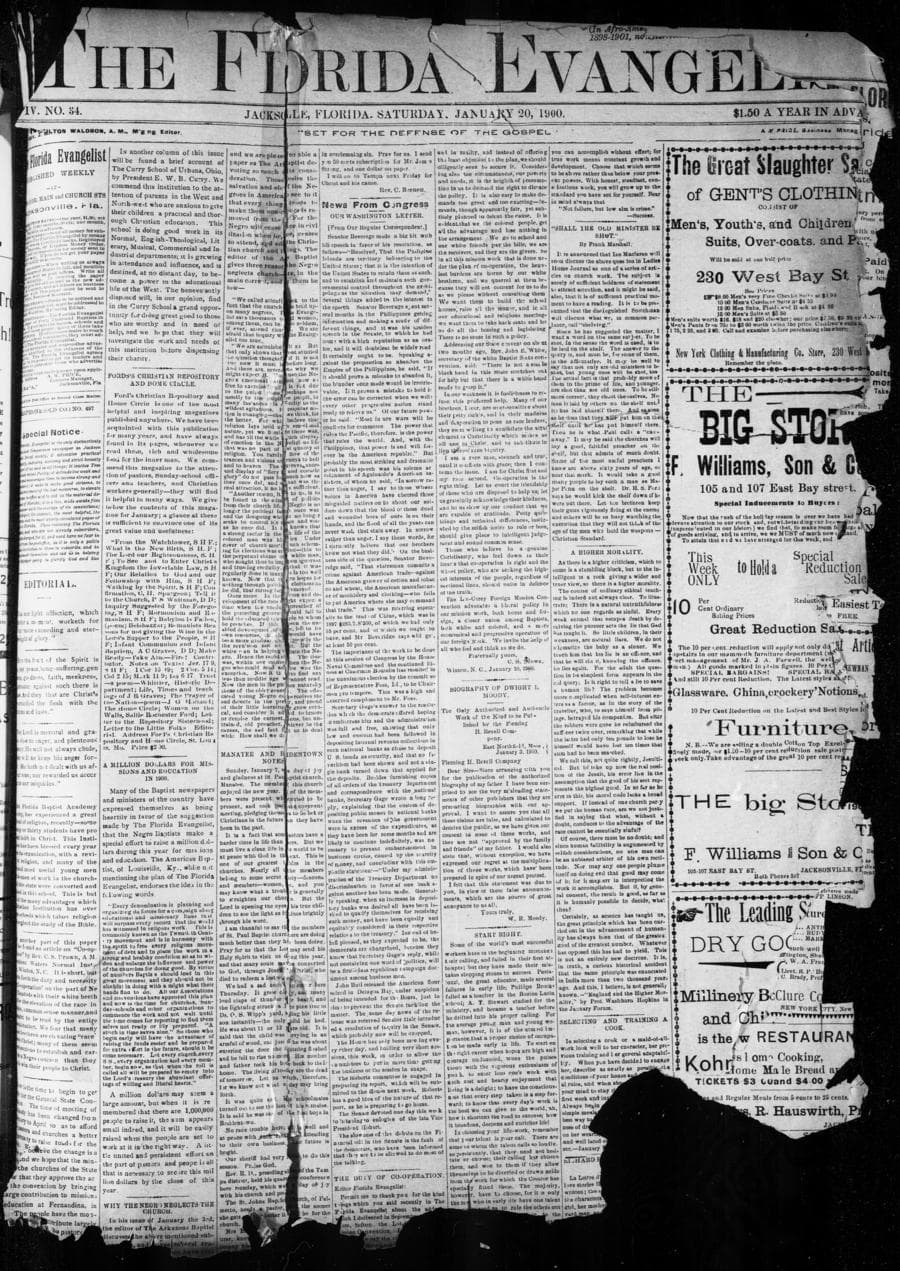
Front page of The Florida Evangelist, January 20, 1900

January 20, 1900 · Jacksonville, Fla.

The Florida Evangelist

A church paper doing the work of a newspaper. For a great many Black communities the congregation was the only institution that could carry a press, so the religious weekly is where the news went.

Read the page →
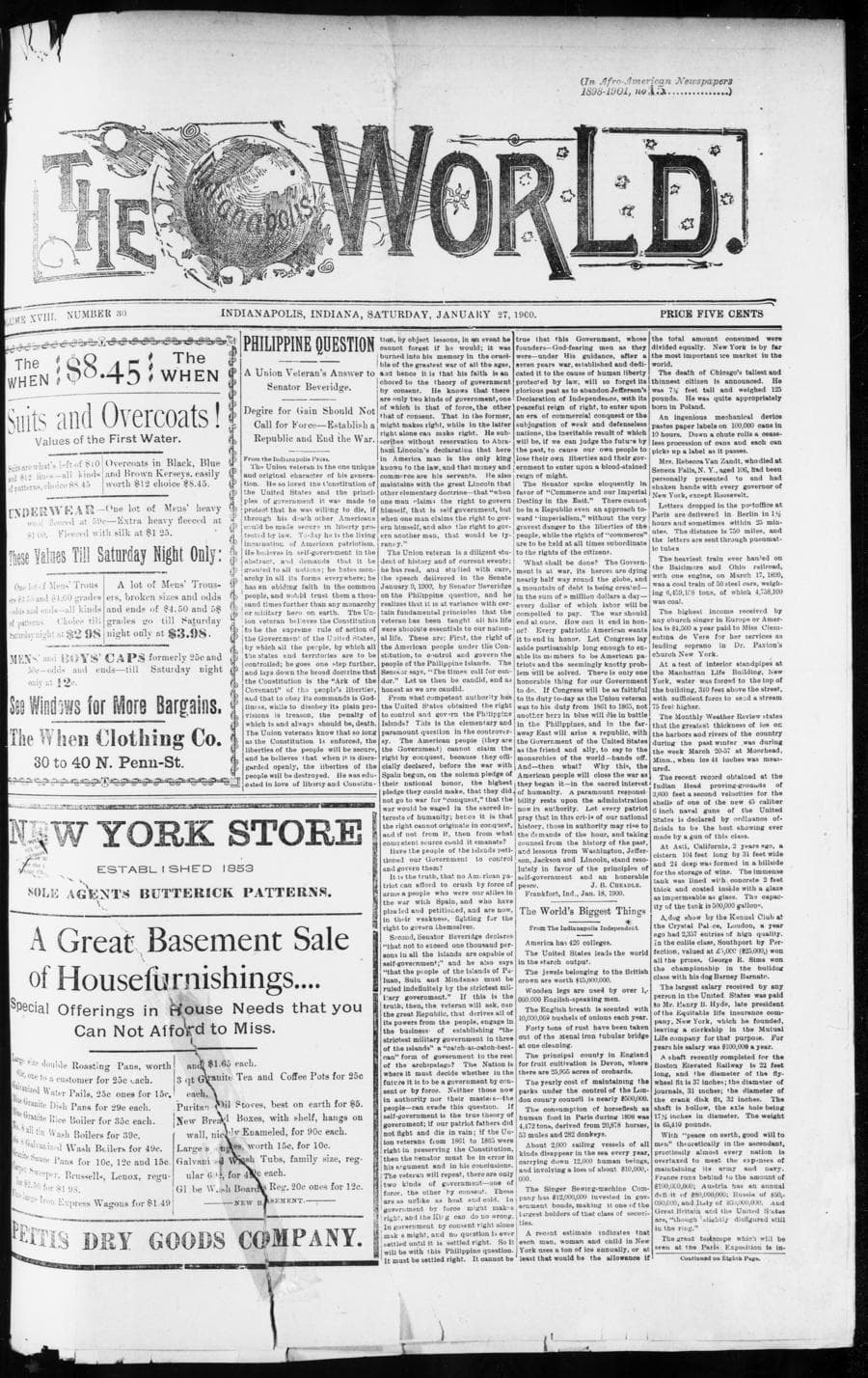
Front page of The Indianapolis World, January 27, 1900

January 27, 1900 · Indianapolis, Ind.

The Indianapolis World

A globe filling the masthead and a price of five cents. Two Black papers were publishing in Indianapolis the same week — this one and The Freeman — which tells you how much there was to report and how little of it anybody else was printing.

Read the page →
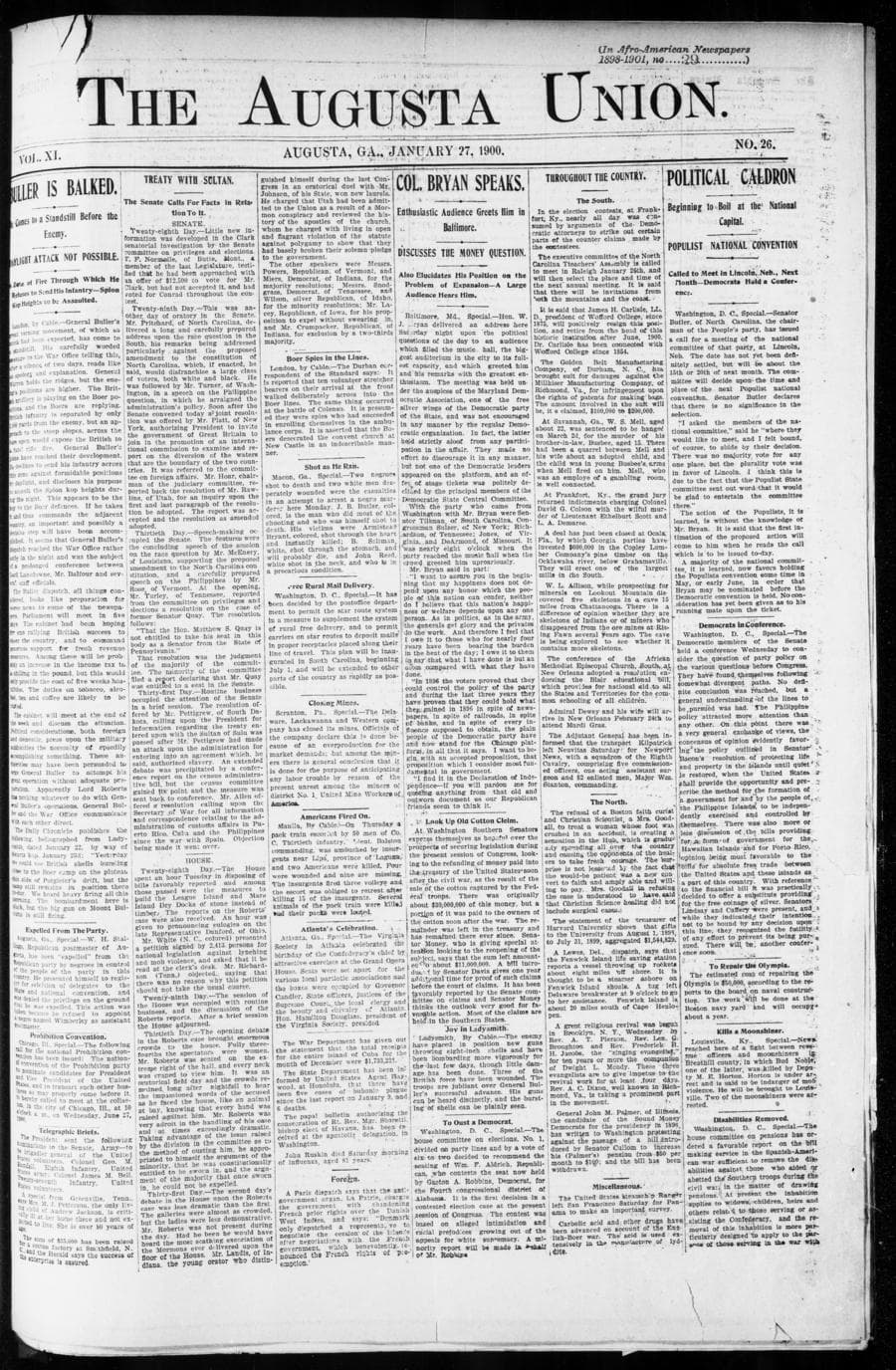
Front page of The Augusta Union, January 27, 1900

January 27, 1900 · Augusta, Ga.

The Augusta Union

Four dense columns, no illustration, nothing wasted. A weekly out of Augusta at the turn of the century, when Georgia had more Black newspapers than any state in the South.

Read the page →
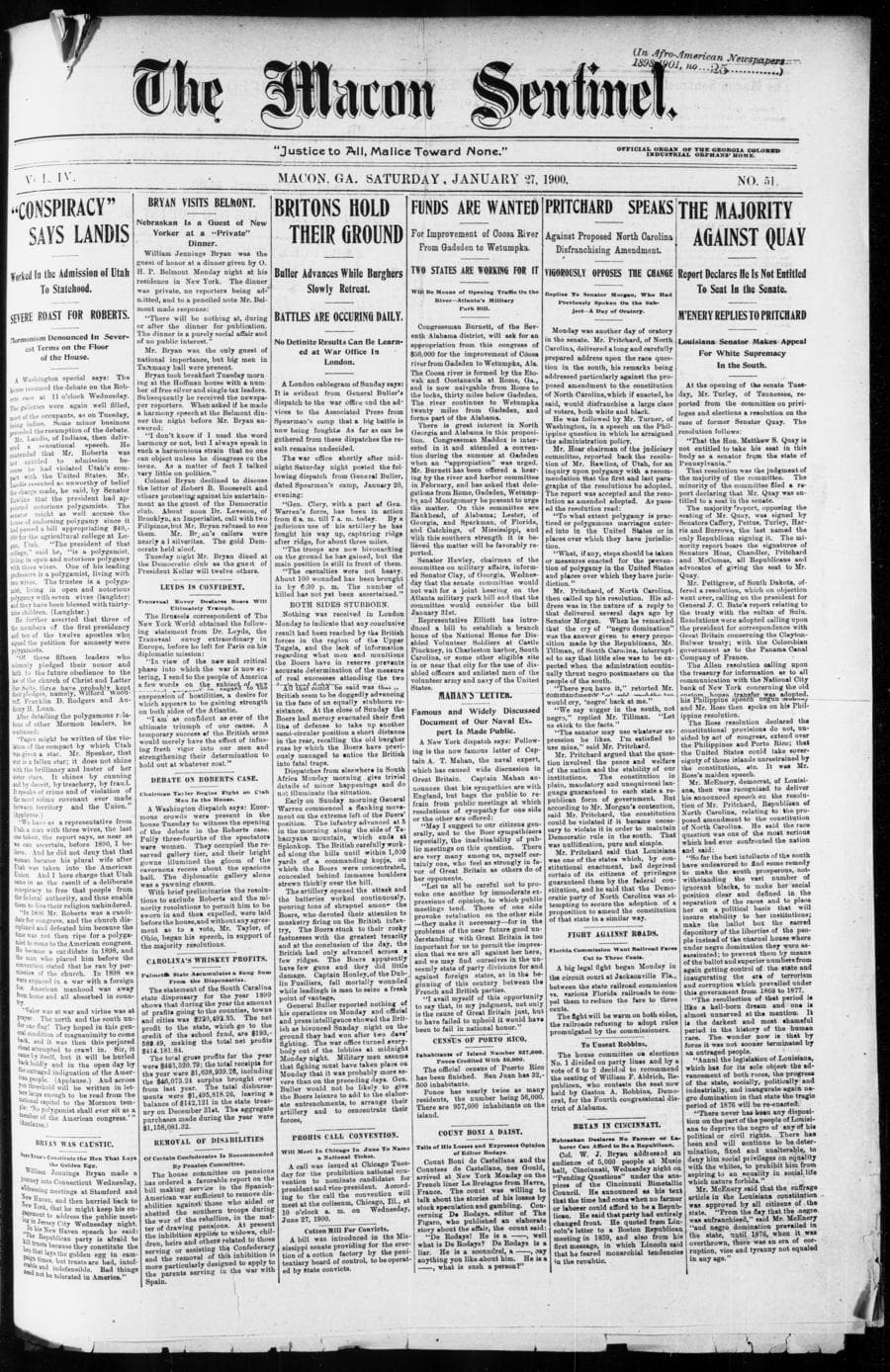
Front page of The Macon Sentinel, January 27, 1900

January 27, 1900 · Macon, Ga.

The Macon Sentinel

“Devoted to All Positive Upward News.” The headlines on this front page argue with each other — one reads “Conspiracy” Says Landers, another “Editors Bold” — which is what a paper looks like when it is the only one telling its side.

Read the page →
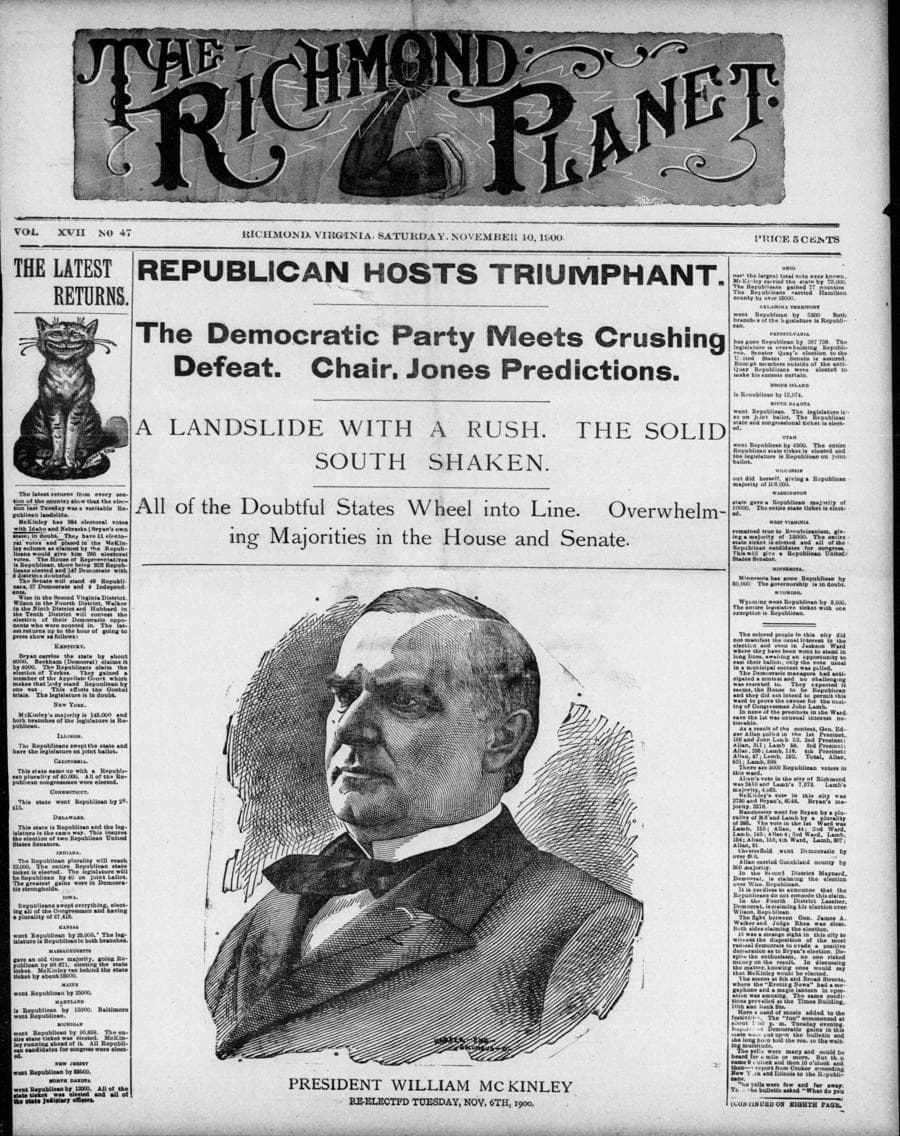
Front page of The Richmond Planet, November 10, 1900

November 10, 1900 · Richmond, Va.

The Richmond Planet

John Mitchell Jr. ran the Planet for nearly fifty years and put a raised, muscled arm gripping lightning in the masthead. He reported lynchings by name and address when doing so could get a man killed.

Read the page →
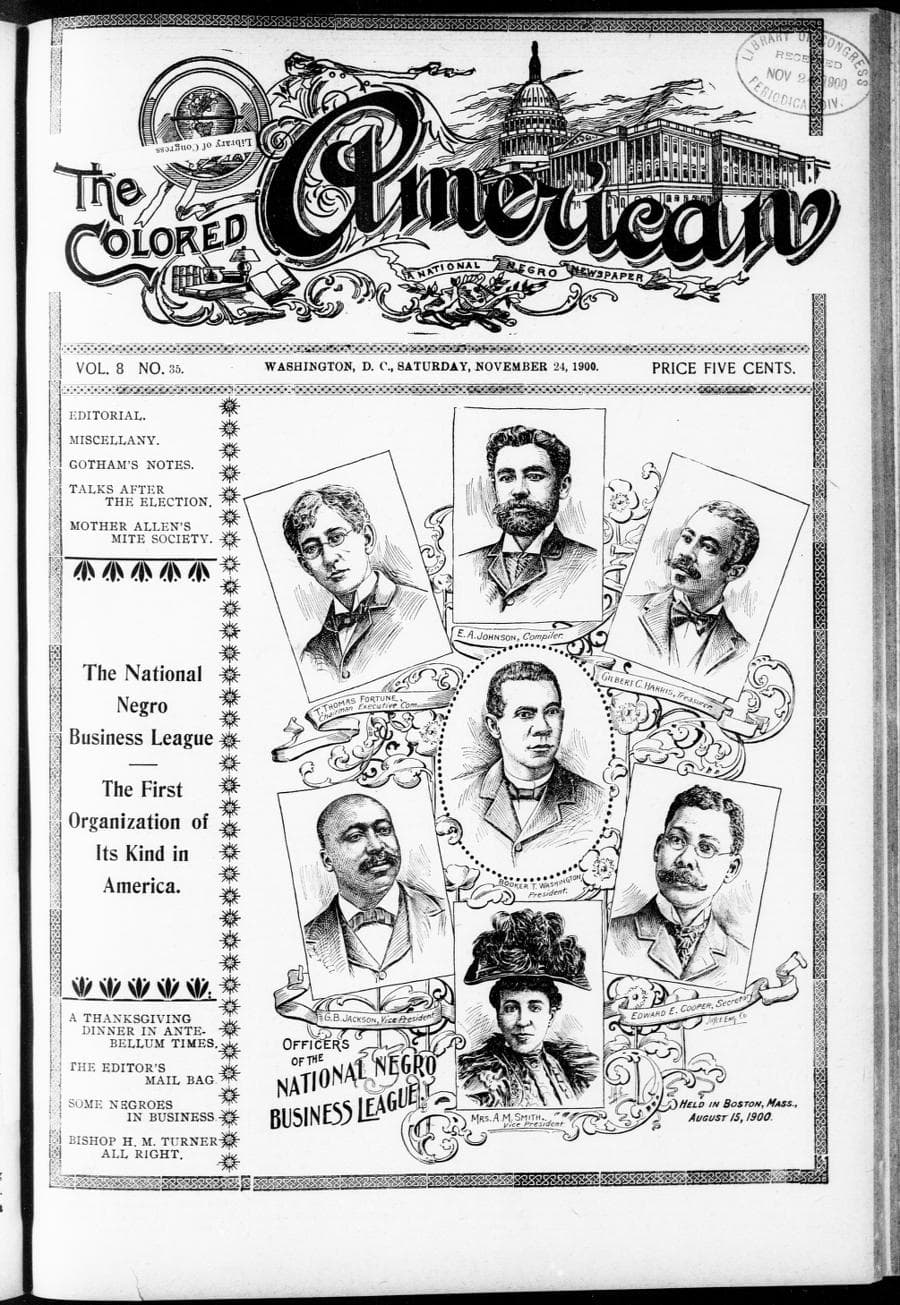
Front page of The Colored American, November 24, 1900

November 24, 1900 · Washington, D.C.

The Colored American

The front page announcing the National Negro Business League — “the first organization of its kind in America” — ringed with portraits of its founding members. Booker T. Washington convened it in Boston that August. This is what a Black business network looked like 126 years ago.

Read the page →
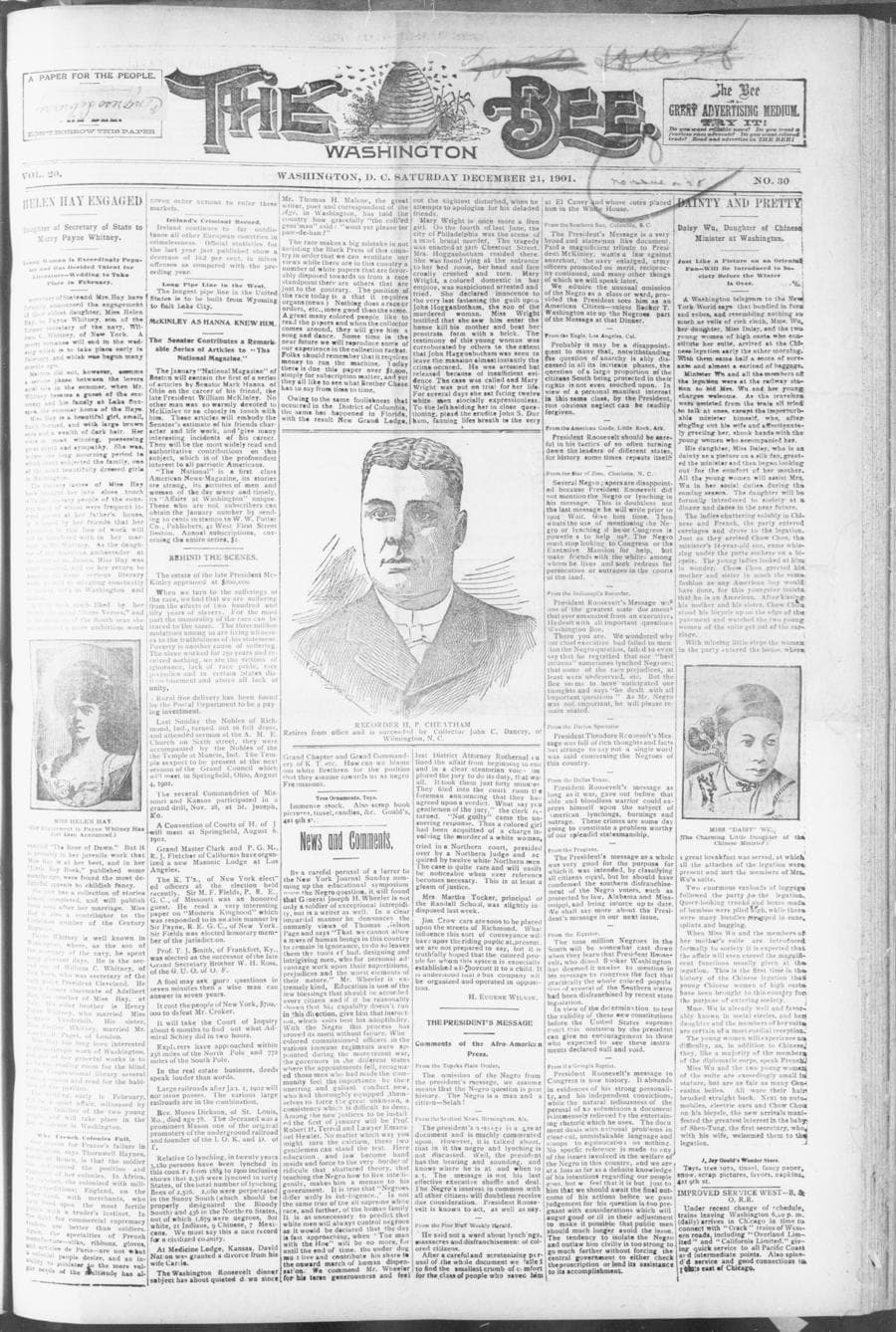
Front page of The Washington Bee, December 21, 1901

December 21, 1901 · Washington, D.C.

The Washington Bee

W. Calvin Chase edited the Bee for 39 years under the motto “Honey for Friends, Stings for Enemies.” He used both liberally, on white officials and Black leaders alike.

Read the page →
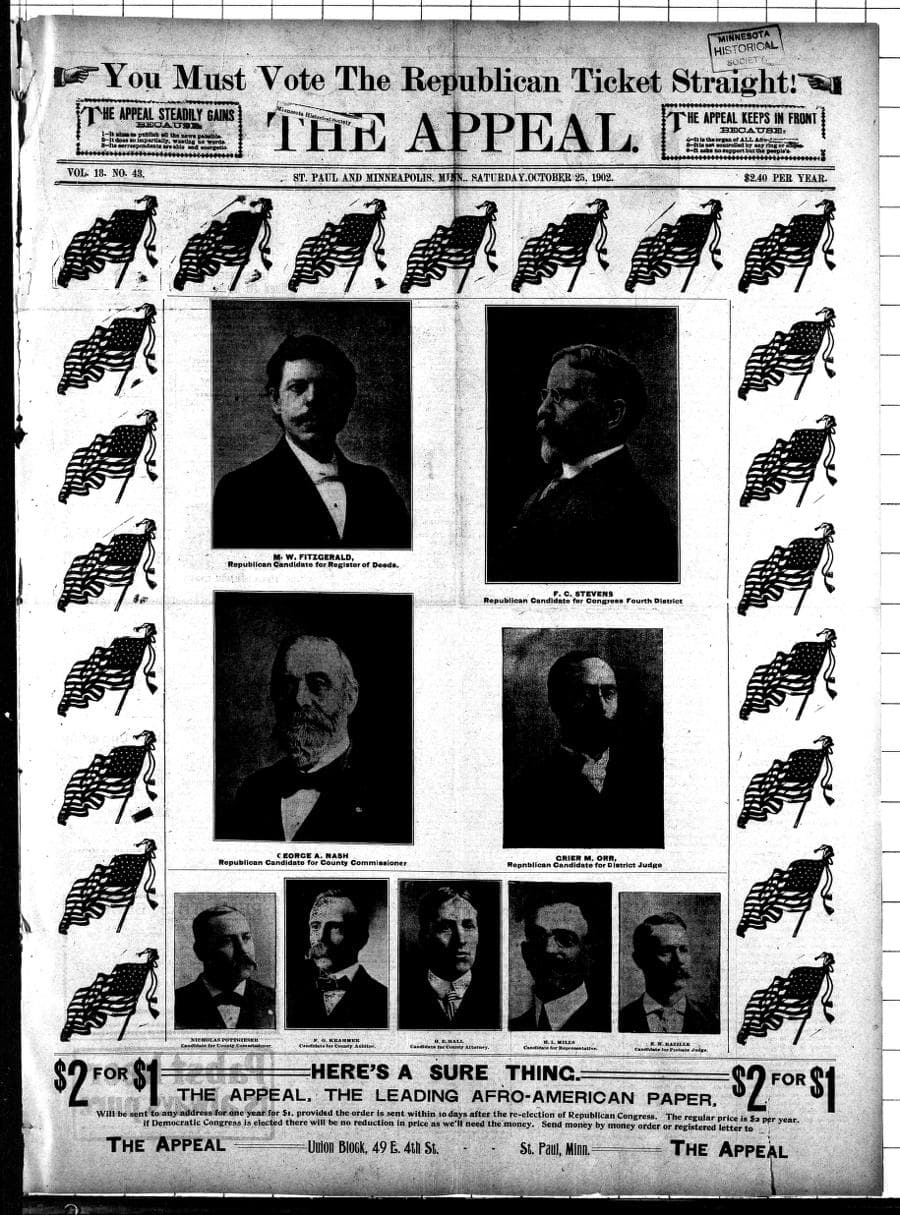
Front page of The Appeal, October 25, 1902

October 25, 1902 · Saint Paul, Minn.

The Appeal

“The leading Afro-American paper.” A national weekly out of Saint Paul with editions in Chicago, Louisville, and Washington — one of the widest-reaching Black papers of its era.

Read the page →
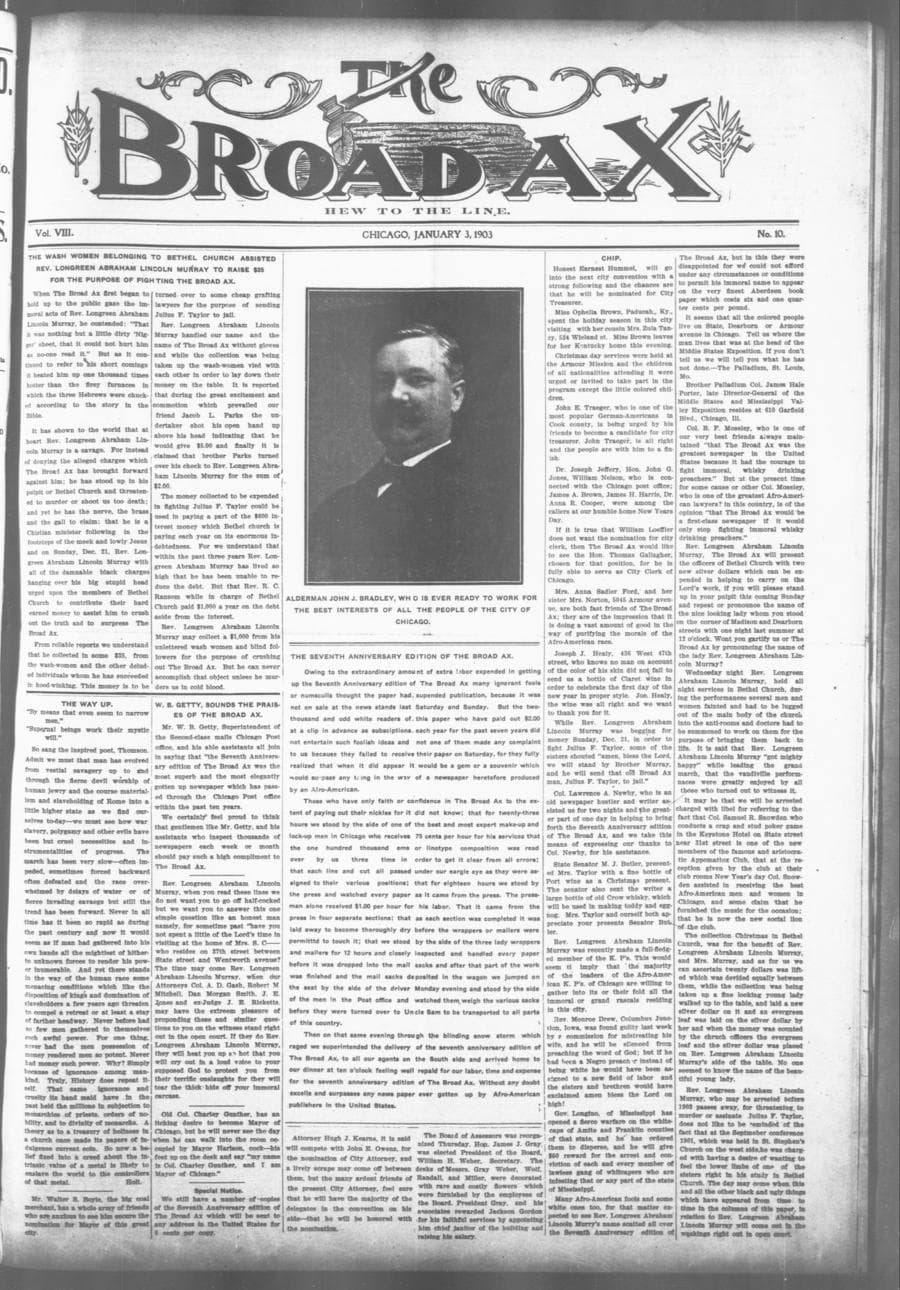
Front page of The Broad Ax, January 3, 1903

January 3, 1903 · Chicago, Ill.

The Broad Ax

Julius F. Taylor moved the Broad Ax from Salt Lake City to Chicago and aimed it at anyone he thought was selling the race short — including the Black establishment of his day.

Read the page →
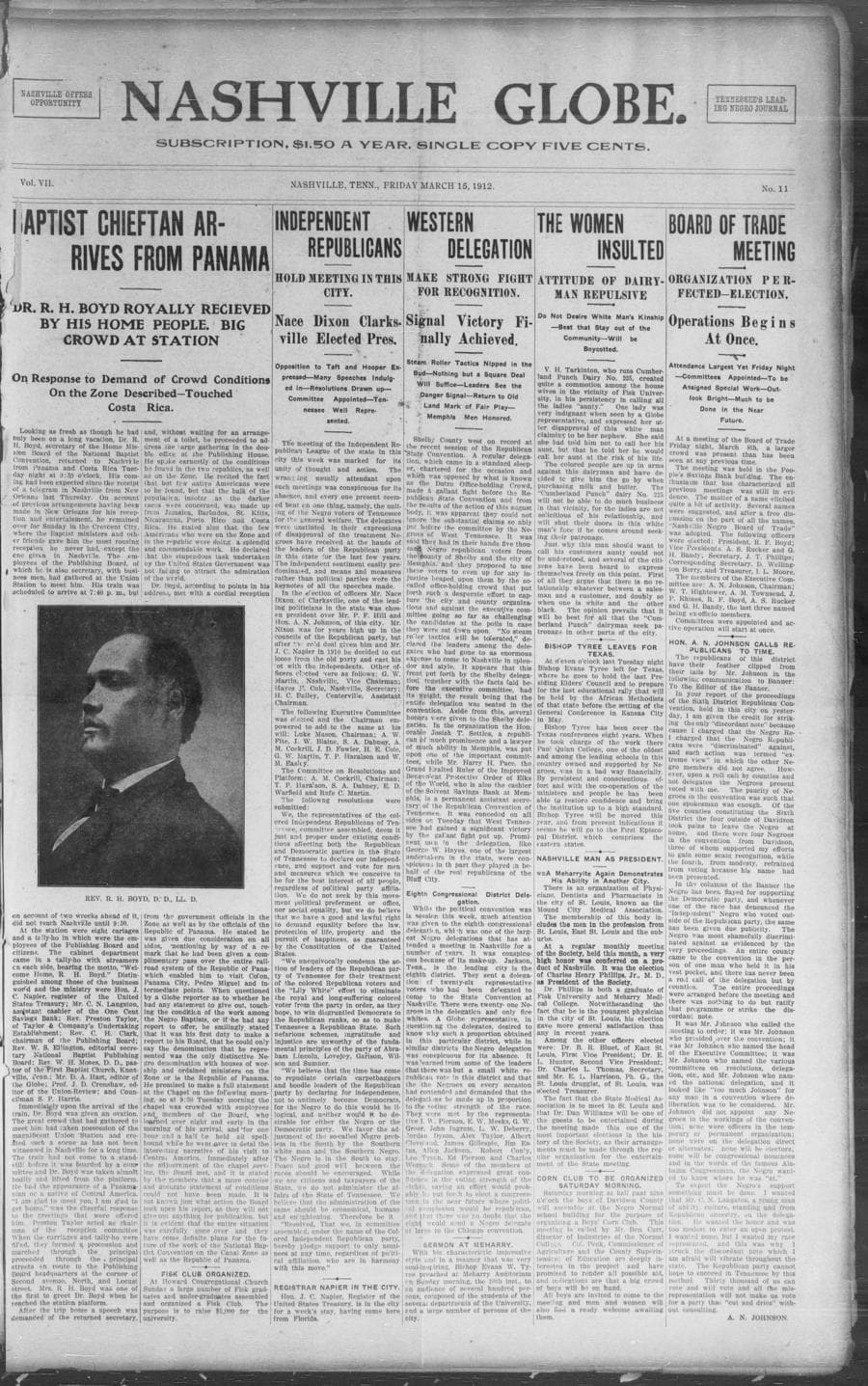
Front page of The Nashville Globe, March 15, 1912

March 15, 1912 · Nashville, Tenn.

The Nashville Globe

Founded during the 1905 streetcar boycott, the Globe backed Black business and Black schooling in Nashville and campaigned for what became Tennessee State University.

Read the page →
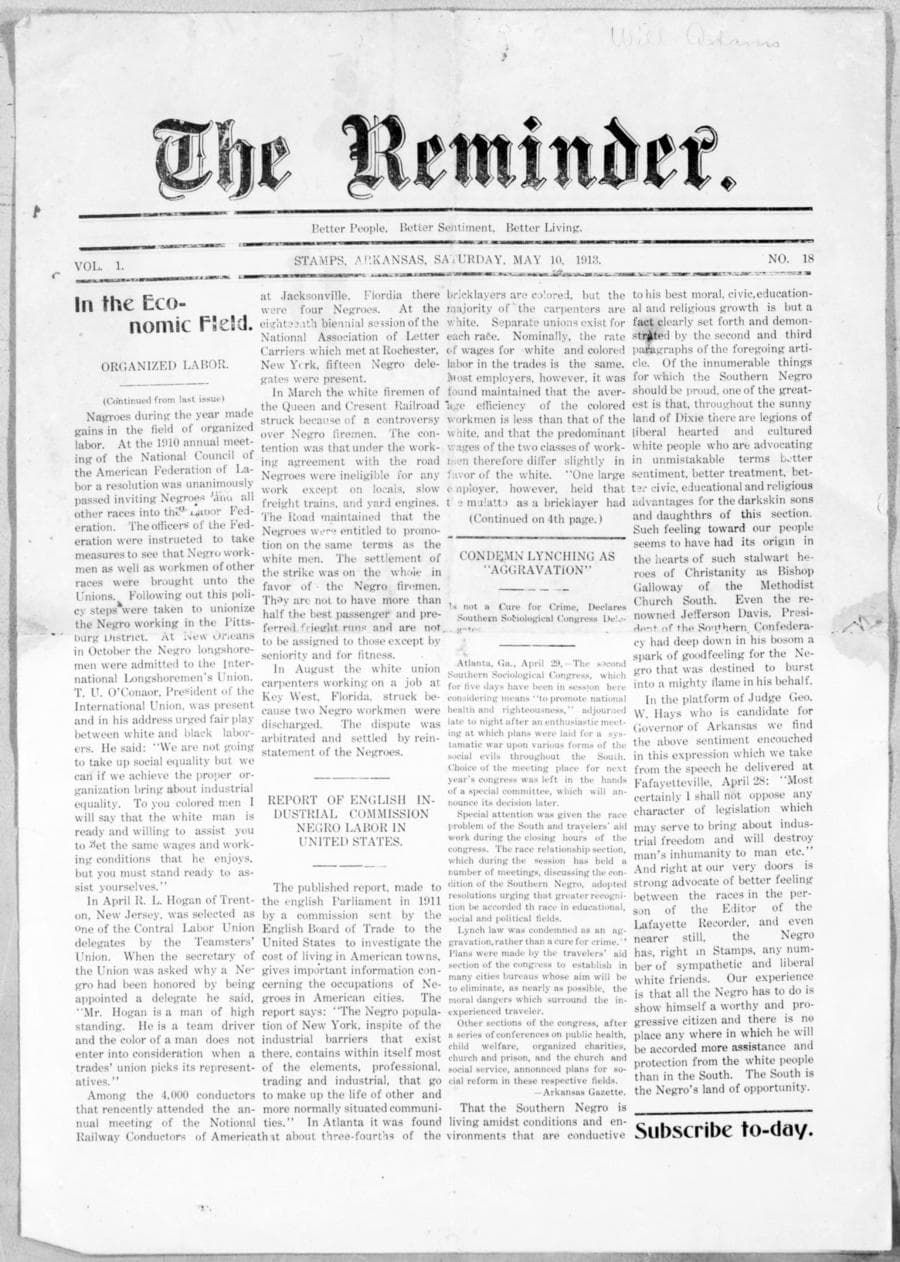
Front page of The Reminder, May 10, 1913

May 10, 1913 · Stamps, Ark.

The Reminder

Stamps, Arkansas — the town Maya Angelou would be sent to as a child two decades later, and write about for the rest of her life. A Black paper was already printing there in 1913.

Read the page →
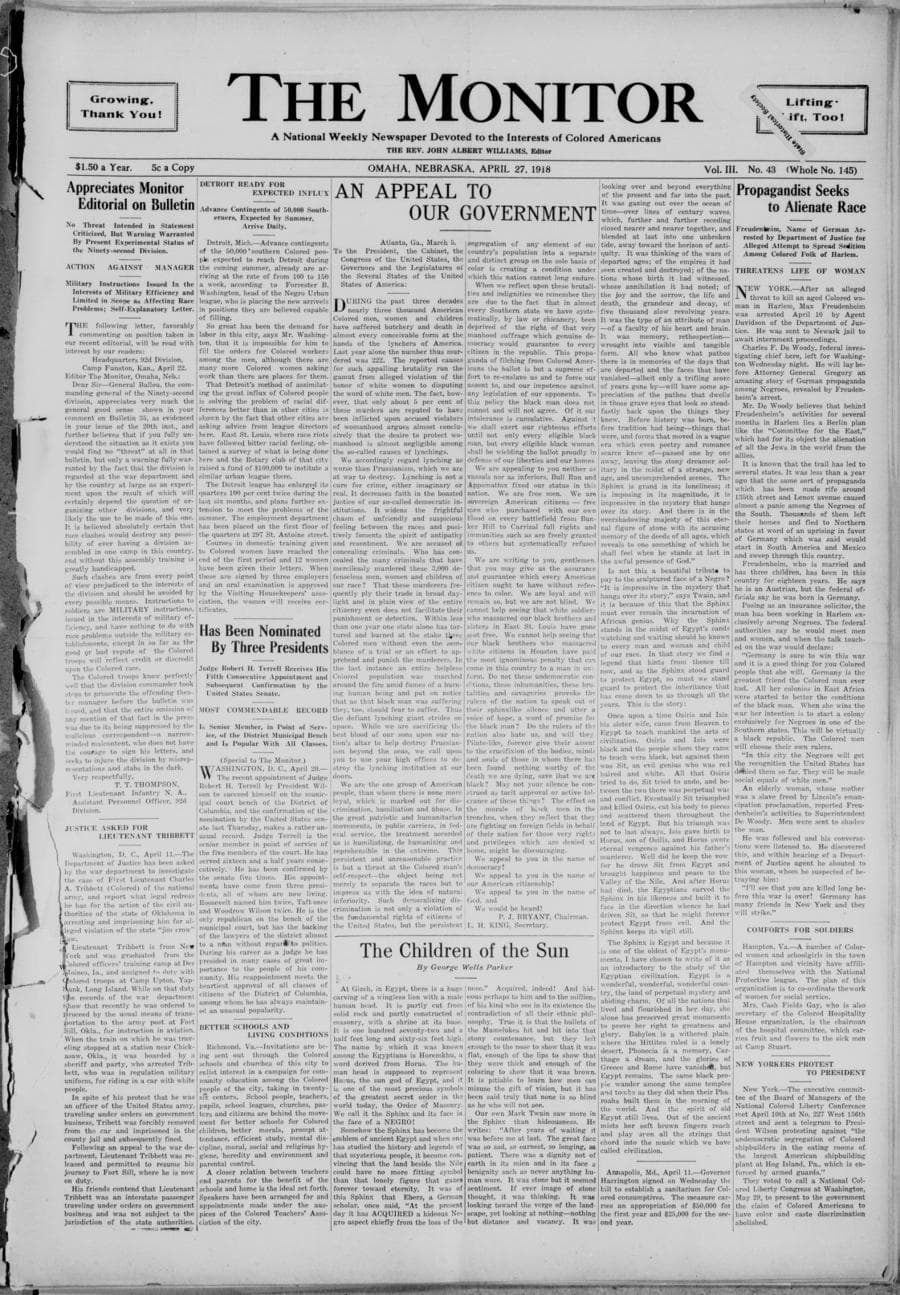
Front page of The Monitor, April 27, 1918

April 27, 1918 · Omaha, Neb.

The Monitor

“A national weekly newspaper devoted to the interests of colored Americans.” Father John Albert Williams founded it in Omaha in 1915 and edited it for a quarter century.

Read the page →

Migration and after

19191999

Six million people left the South. The press went with them, and papers appeared in Chicago, Omaha, Lincoln and the new Black suburbs — some of them still publishing now.

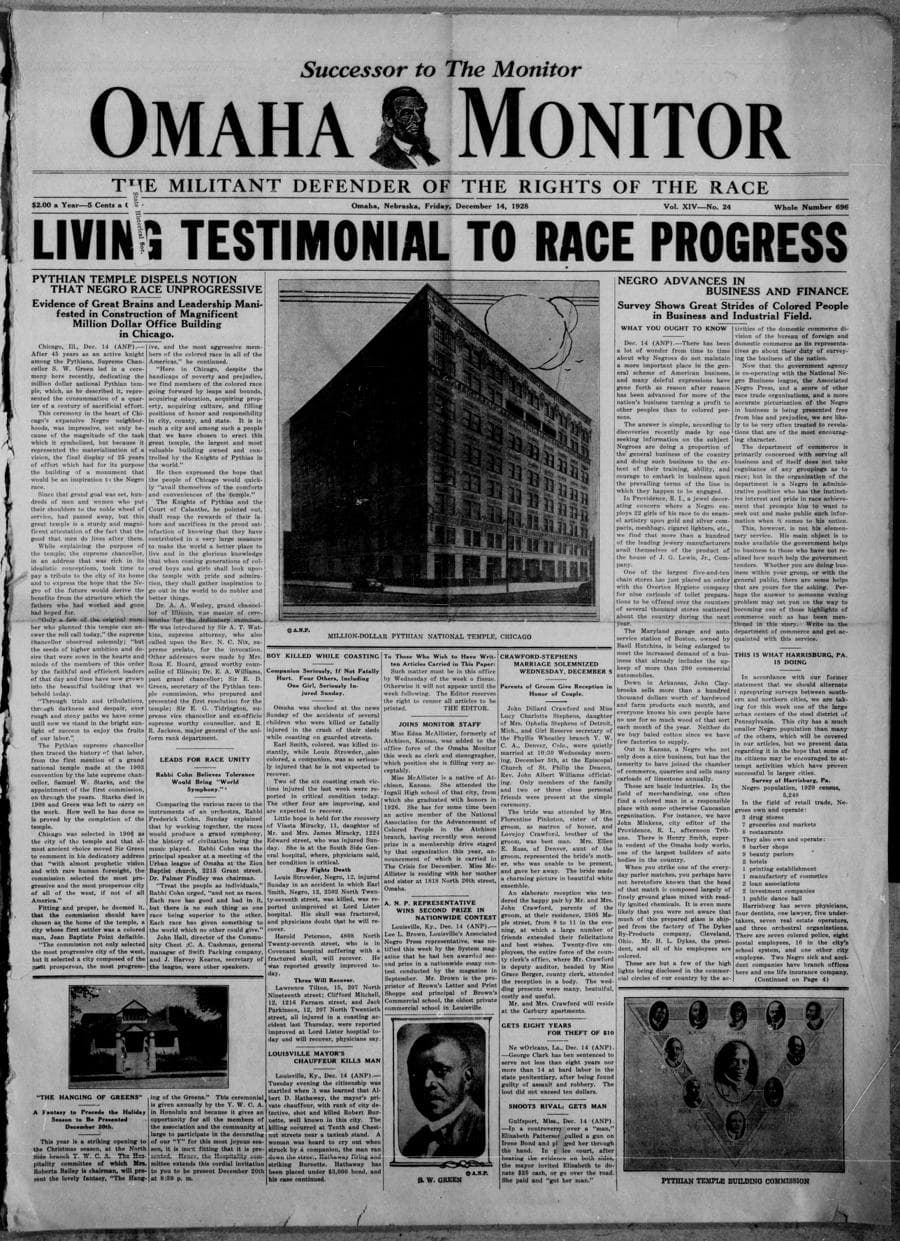
Front page of Omaha Monitor, December 14, 1928

December 14, 1928 · Omaha, Neb.

Omaha Monitor

“The militant defender of the rights of the race,” printed under the masthead where other papers put the price. It succeeded the Monitor and kept its volume numbering — this issue is only the second under the new name and already carries volume fourteen.

Read the page →
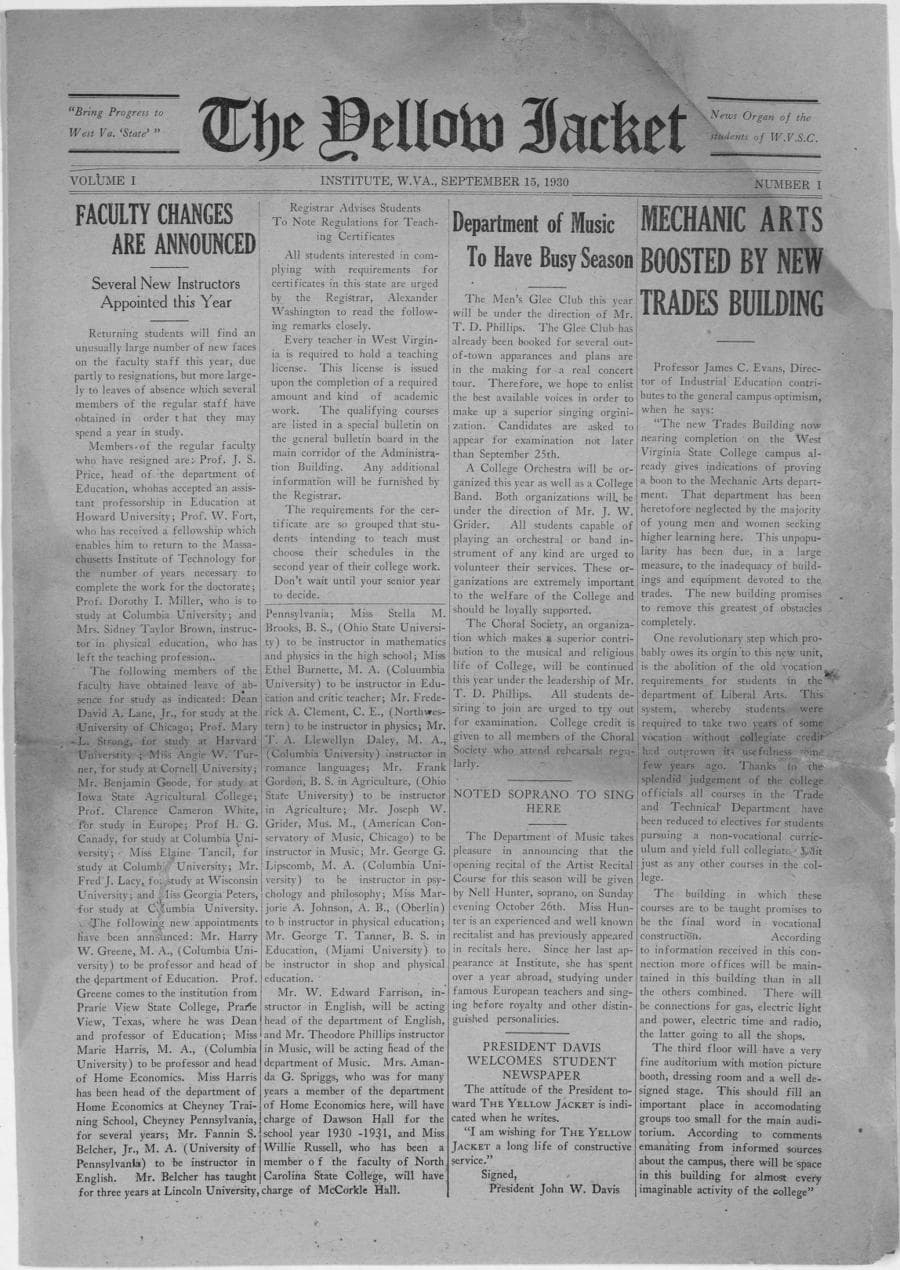
Front page of The Yellow Jacket, September 15, 1930

September 15, 1930 · Institute, W. Va.

The Yellow Jacket

Still publishing

The student newspaper of West Virginia State, a historically Black college, opening the school year with faculty appointments and a new trades building. Students have been putting it out for most of a century, and still are.

Read the page →
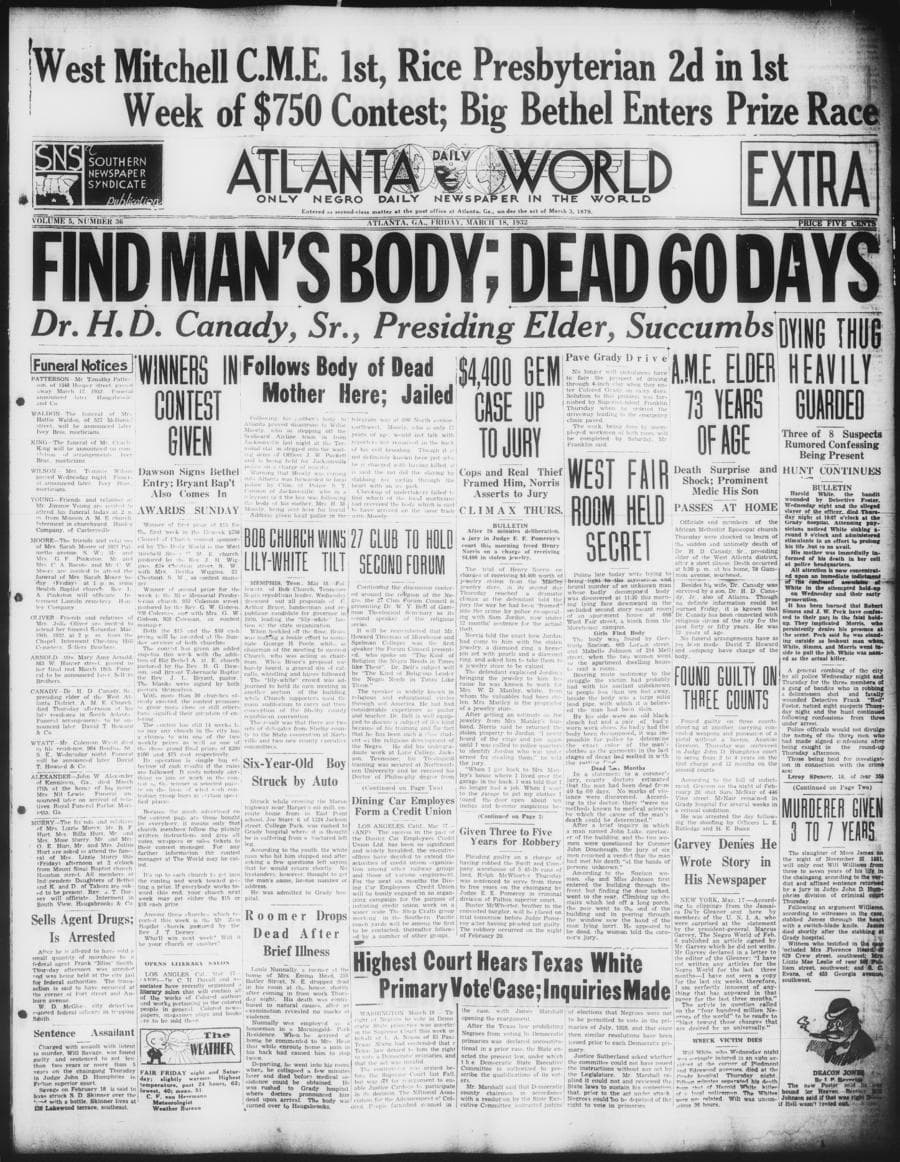
Front page of Atlanta Daily World, March 18, 1932

March 18, 1932 · Atlanta, Ga.

Atlanta Daily World

Still publishing

W. A. Scott II was twenty-six when he started this paper, and on 13 March 1932 he took it daily — the first Black daily newspaper in America to survive. This copy was printed five days later, in its first week, and it is the earliest issue the Library of Congress holds. Its offices were on Auburn Avenue, in the middle of the Black business district. Within a year Scott was syndicating fifty papers.

Read the page →
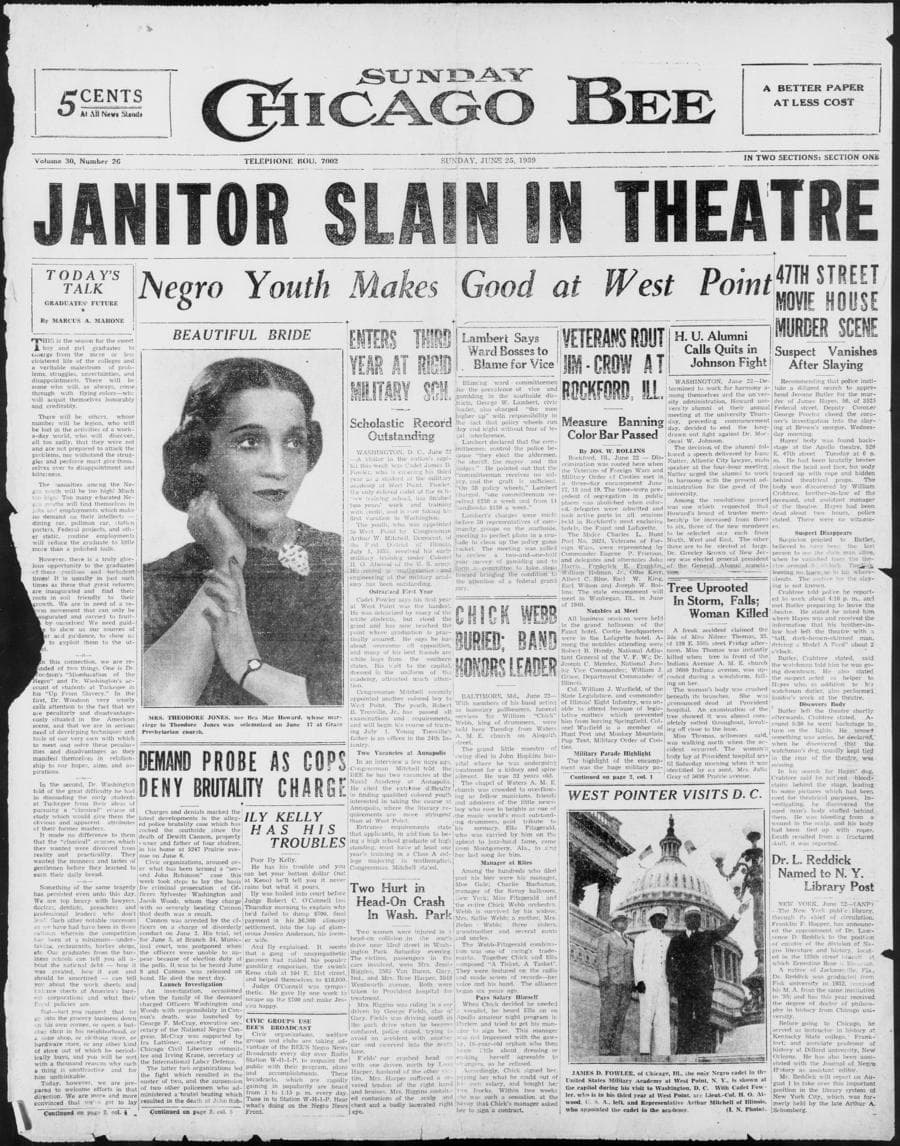
Front page of Sunday Chicago Bee, June 25, 1939

June 25, 1939 · Chicago, Ill.

Sunday Chicago Bee

Anthony Overton founded the Bee in 1925 on the profits of a cosmetics company and a bank he also owned. In 1930 the paper ran a contest to elect a “Mayor of Bronzeville” — and that is where the name of Chicago's South Side comes from. A neighborhood of a hundred thousand people is called what a Black newspaper decided to call it.

Read the page →
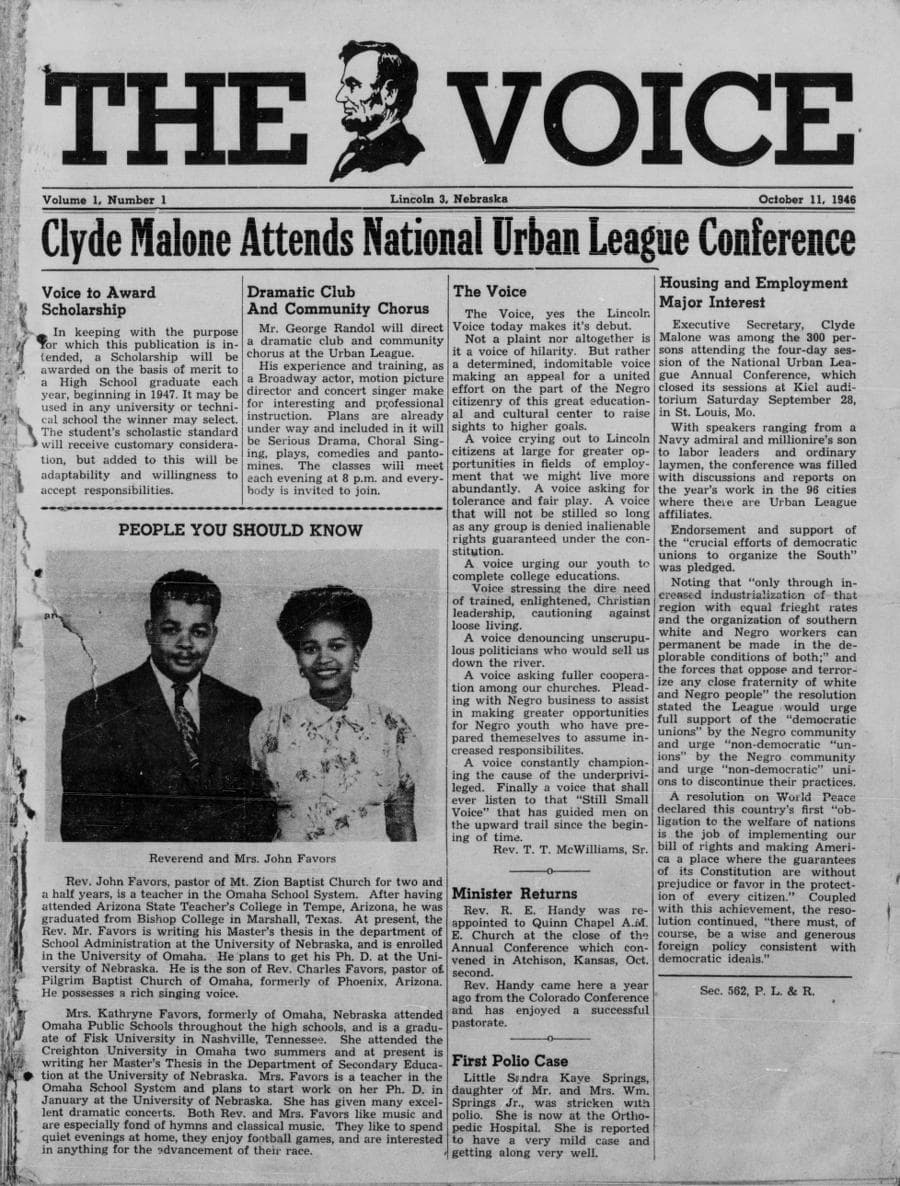
Front page of The Voice, October 11, 1946

October 11, 1946 · Lincoln, Neb.

The Voice

Issue no. 1

Volume one, number one, the year after the war ended: “dedicated to the promotion of the cultural, social and spiritual life of a great people.” Lincoln, Nebraska had a Black population in the low thousands and it had its own paper, leading with a local man at the National Urban League conference.

Read the page →
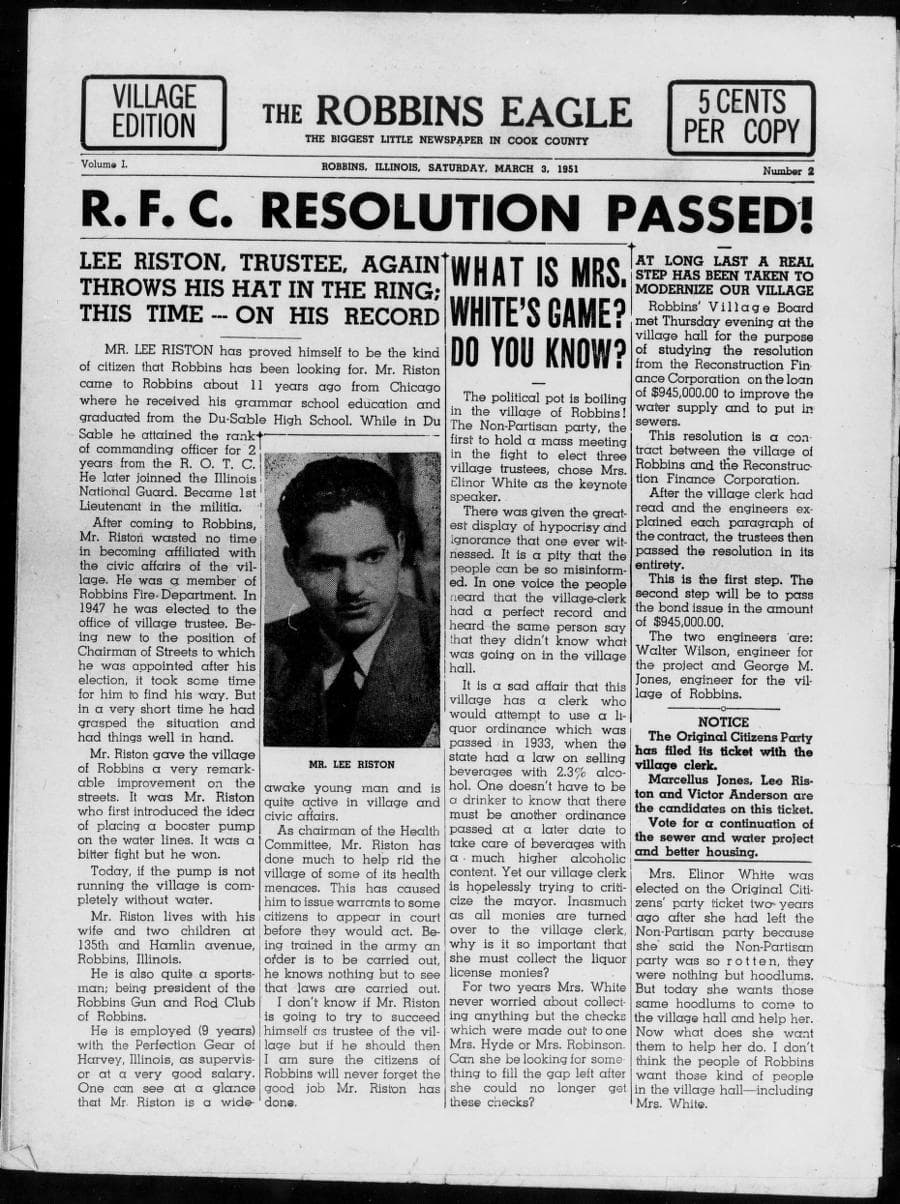
Front page of The Robbins Eagle, March 3, 1951

March 3, 1951 · Robbins, Ill.

The Robbins Eagle

Robbins, Illinois was incorporated in 1917 and governed entirely by Black residents — the first town in Cook County where Black families could own the land they stood on. In 1931 it built the first Black-owned airfield in the country. This is the second issue its newspaper ever printed, covering a village board vote, and it calls itself the world's littlest newspaper.

Read the page →
About these scans. All 29 pages come from the Library of Congress Chronicling America collection, which states that the newspapers in it are in the public domain. Each one was pulled by its LCCN catalog number and then looked at, because searching by title alone had returned a white Nevada paper and the New-York Tribune, which is not something that belongs on this page. Every era, date and count above is worked out from the collection itself, so adding a page cannot leave a number behind. 34 of the citations on the Record were taken out of 6 of these papers, and the two collections are joined on the catalog number rather than on the title — a name is not an identifier.

They built the network on paper. We're building it here.

The National Negro Business League met in 1900 because Black owners needed each other. That has not changed. Only the room has.

Join the network